Electroless Nickel Plating
A uniform nickel-phosphorus coating that adds hardness, wear and corrosion resistance to steel, aluminum and copper alloy parts.
Electroless nickel deposits evenly on edges, bores and internal features, typically 3–40 µm thick with a tolerance of about ±2.5 µm (±0.0001 in). We plate in our own factory in Dongguan, and every quote is reviewed by an engineer within 24 hours, with no minimum order quantity.
What Is Electroless Nickel Plating?
Electroless nickel plating, often called EN or ENP, deposits a nickel-phosphorus alloy by a chemical reaction instead of electric current: a reducing agent turns nickel ions into metal on the part's catalytic surface, and the reaction continues on the nickel already deposited.
Without current there are no high- and low-current areas, so the layer grows equally on edges, in holes and inside bores, typically at about 10–20 µm per hour.
The phosphorus content decides the properties: more phosphorus improves corrosion resistance, less gives higher hardness, and heat treatment after plating raises the hardness further.
Electroless Nickel Specifications
Typical values for mid- and high-phosphorus electroless nickel plated in our own factory, confirmed in your quote.
| Property | Specification | Notes |
|---|---|---|
| Standards | ASTM B733, AMS 2404 | Type and class as your drawing specifies |
| Thickness | 3–40 µm (0.0001–0.0016 in) | Typically 5–25 µm |
| Thickness tolerance | About ±2.5 µm (±0.0001 in) | Even on edges, holes and bores |
| Phosphorus content | Mid 6–9 % or high 10–13 % | Low phosphorus on request |
| Hardness | About 450–600 HV as plated | Up to about 900–1,000 HV after heat treatment |
| Appearance | Semi-bright to bright, uniform | Not a cosmetic finish |
| Substrates | Steel, stainless steel, aluminum, copper, brass | Each with its own pretreatment |
| Pretreatment | Sand blasting as standard | Machining marks stay visible otherwise |
Advantages of Electroless Nickel
Electroless nickel protects and hardens a part in one even layer. These are the reasons to choose it; the points to plan for, such as allowances and pretreatment, are in the design considerations further down.
The layer builds to the same thickness on outside faces, edges and corners, about ±2.5 µm, so plated fits and threads stay predictable instead of growing on edges and thinning in recesses.
Wherever the solution reaches, the nickel deposits: blind holes, bores, channels, threads and cavities are covered evenly, which electroplating cannot do on the same geometry.
The nickel-phosphorus alloy shields steel, aluminum and copper alloys from moisture, salt and chemicals, and its hardness resists wear and galling on sliding and mating faces.
The deposit is smooth and semi-bright to bright, with a clean metallic look on every face. It copies the surface beneath, so it is a functional rather than a cosmetic finish.
The reaction runs without current, so the coating does not depend on where electrodes or contacts sit, and small parts can be plated loose in baskets as well as on racks.
Electroless Nickel Types
Electroless nickel is classified by its phosphorus content, as in ASTM B733. Each range suits a different job; we plate mid and high phosphorus as standard in our own factory.
Low Phosphorus (1–5 %)
The hardest deposit as plated, with good wear resistance and solderability. It resists alkalis well but is less resistant to acids, and it is magnetic. It is available on request for wear and electronic parts; we confirm it in your quote.
- Hardness
- About 650–700 HV as plated
- Best for
- Wear, solderability
Mid Phosphorus (6–9 %)
The most widely used grade: a bright to semi-bright deposit with a good balance of hardness and corrosion resistance at a moderate cost. It is the usual choice for general engineering parts.
- Hardness
- About 500–600 HV as plated
- Look
- Bright to semi-bright
High Phosphorus (10–13 %)
A semi-bright deposit with the best corrosion and chemical resistance, non-magnetic as plated. It suits oil and gas, chemical, food and marine parts exposed to salt, acids or constant moisture.
- Hardness
- About 450–500 HV as plated
- Best for
- Corrosion, non-magnetic parts
Materials for Electroless Nickel
Electroless nickel bonds to most engineering metals once the surface is prepared correctly, so our engineers check the substrate with every quote.
Substrates
Material certificates are available on request.
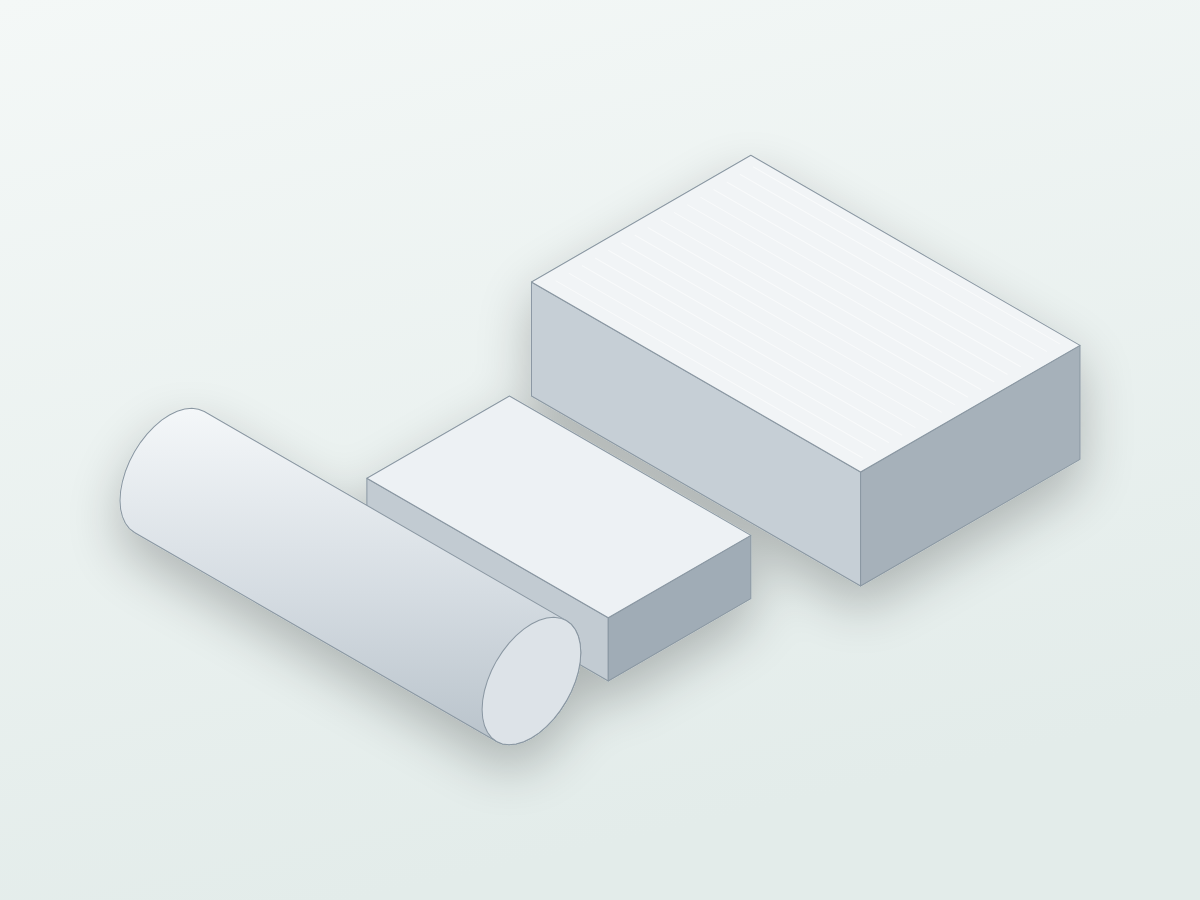
Steel and Stainless Steel
Carbon and alloy steels plate readily after cleaning and activation; stainless steel needs a nickel strike first.
Typical parts
Shafts, molds, hydraulic parts, valve parts
Watch for
Hardened steels are baked against hydrogen embrittlement
Aluminum
Plated after a zincate pretreatment that replaces the oxide film, adding a hard, solderable and conductive surface.
Typical parts
Housings, heat sinks, connectors, pistons
Watch for
An adhesion bake after plating
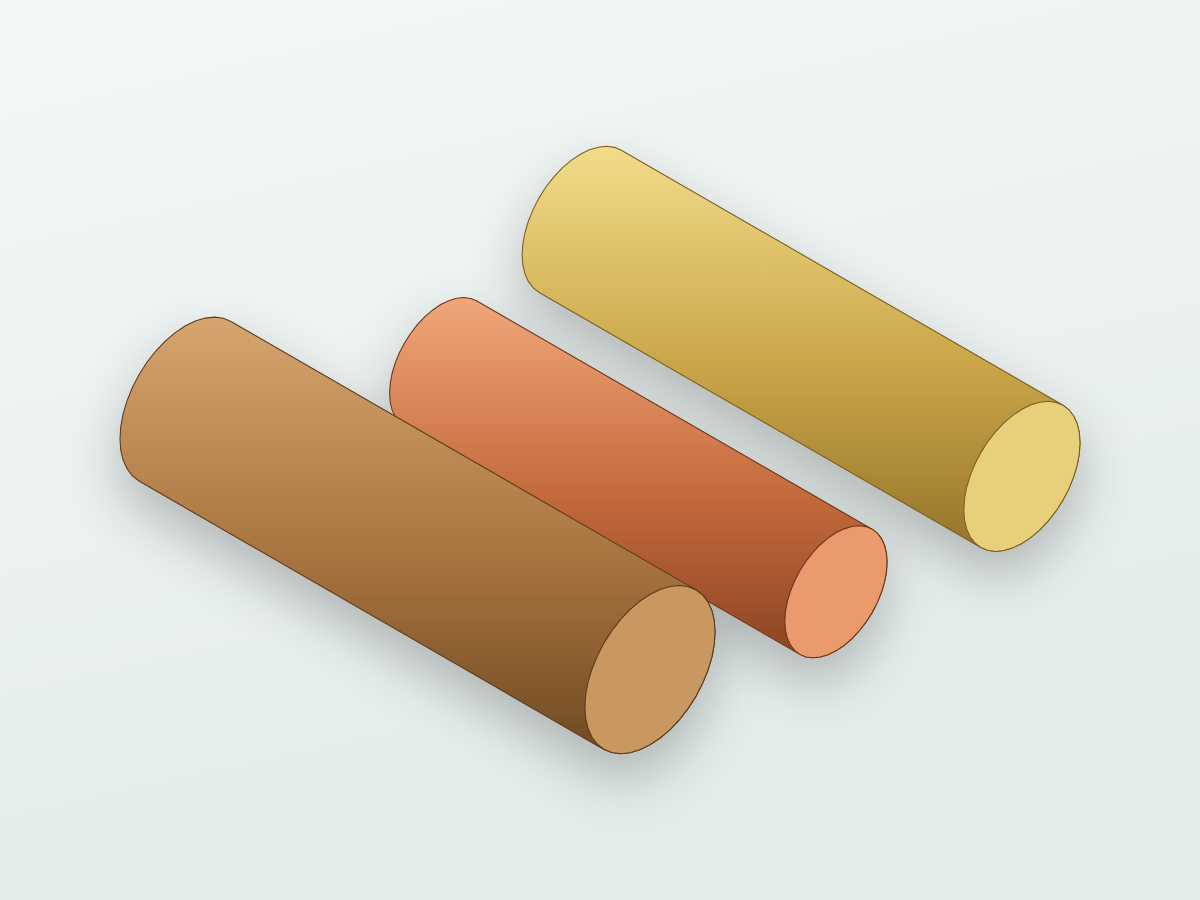
Copper and Brass
Activated before plating, because copper does not start the reaction itself; the nickel then blocks tarnish.
Typical parts
Connectors, terminals, RF parts, busbars
Watch for
Activation and thorough cleaning
Electroless Nickel Applications
Electroless nickel is chosen where parts need even protection on complex shapes, hard wear surfaces or tight tolerances after plating.
Energy
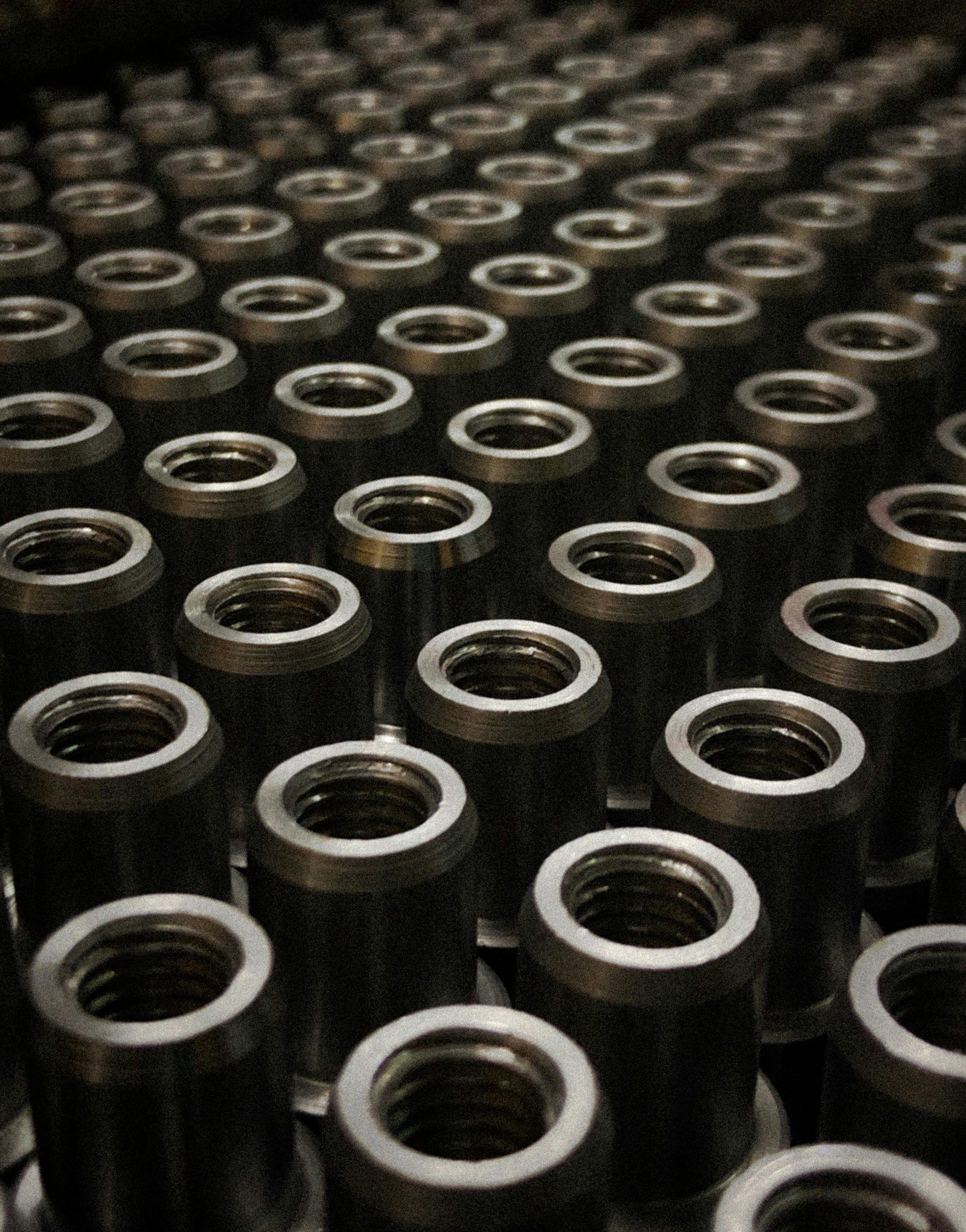
Valve bodies, pump parts, ball valves and drilling components use high-phosphorus electroless nickel against corrosive fluids, salt water and wear, often replacing more costly stainless steel or nickel alloy parts.
- Typical parts
- Valve bodies, balls, pump housings, fittings
Electronics
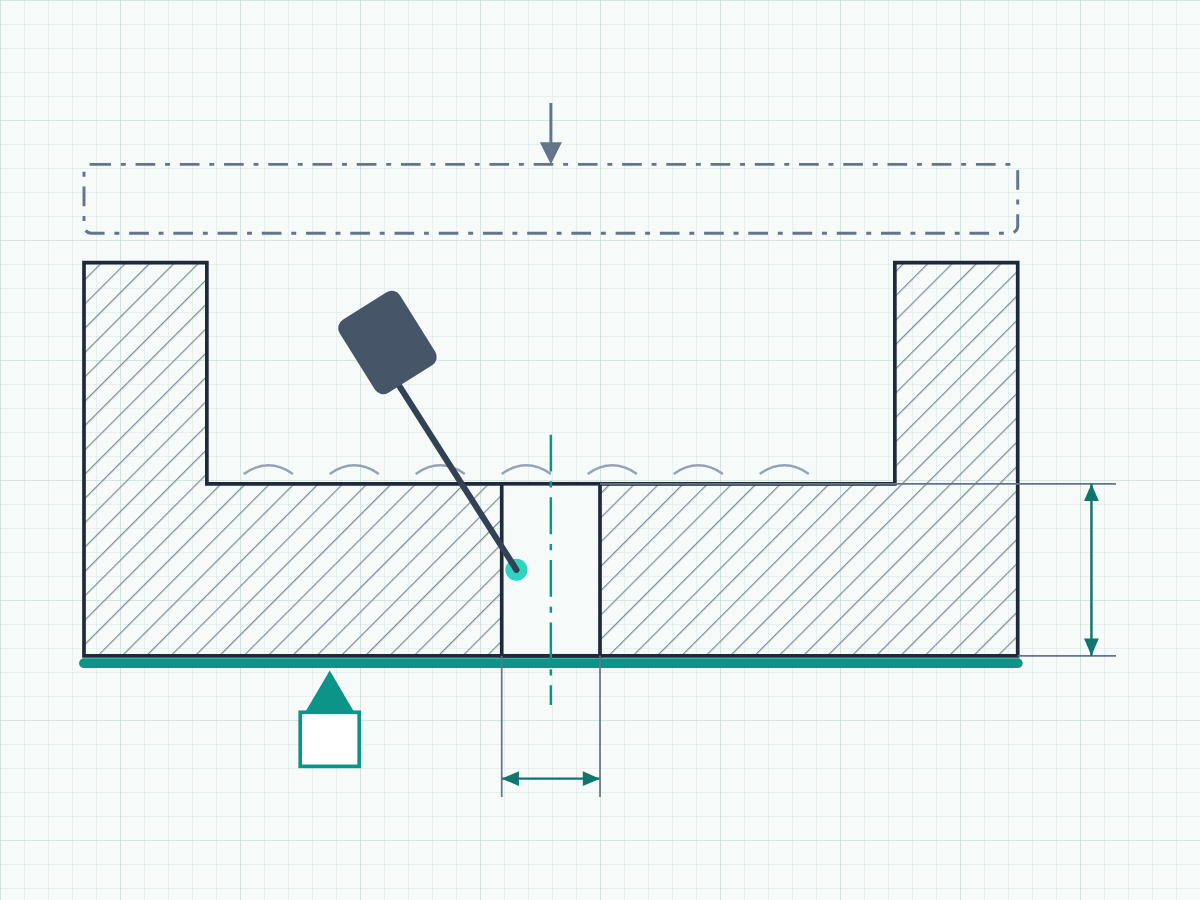
Connectors, RF housings, heat sinks and shields are plated for a solderable, conductive and corrosion-resistant surface that covers internal cavities, blind holes and threads evenly, where electroplating would leave thin spots.
- Typical parts
- Connectors, RF housings, shields, heat sinks
Aerospace
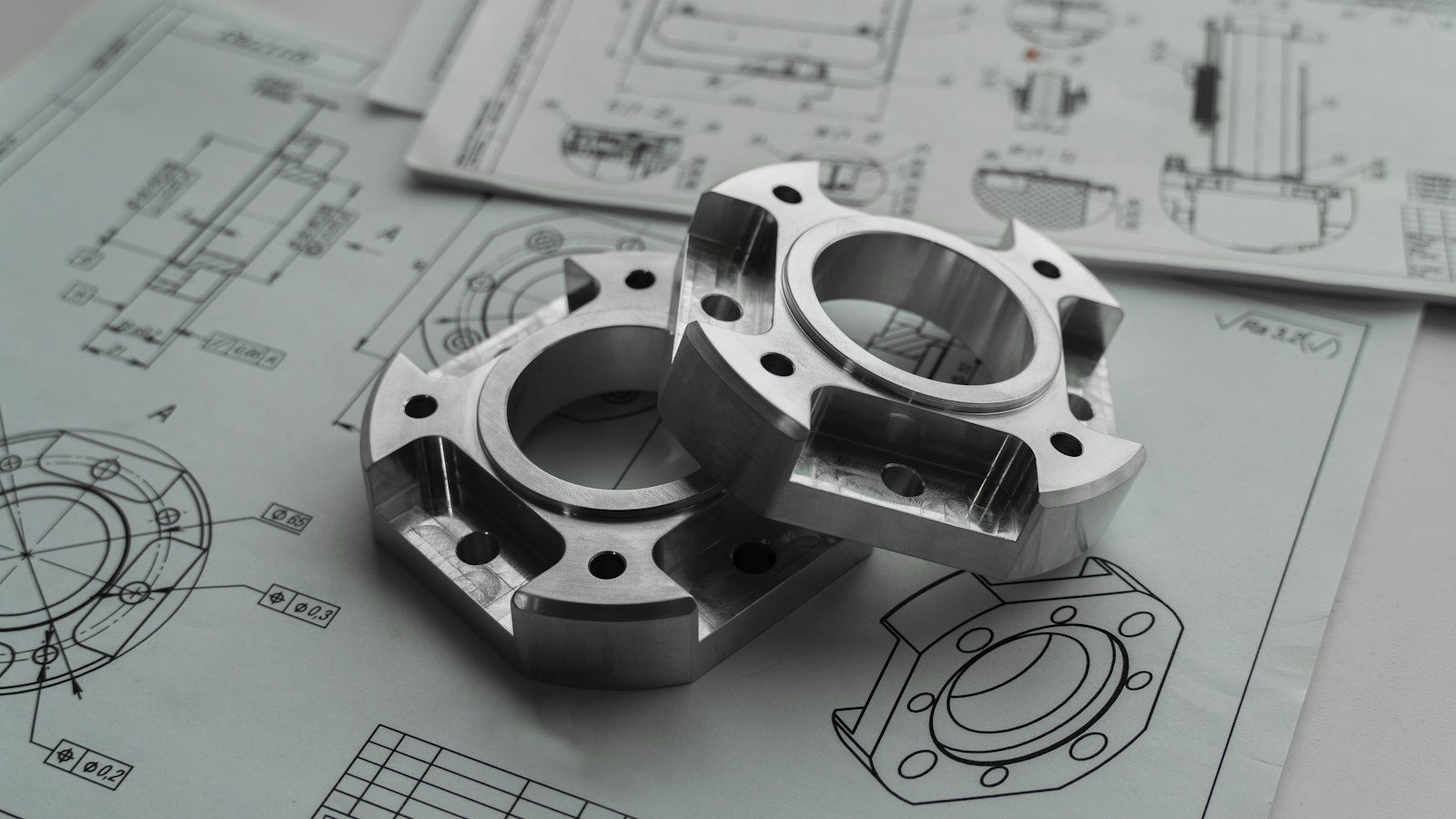
Hydraulic, fuel system and actuator parts rely on electroless nickel for wear resistance and uniform protection in bores, ports and threads, often on lightweight aluminum parts to save weight in flight.
- Typical parts
- Hydraulic fittings, actuator parts, fuel system parts
Design Considerations for Electroless Nickel Parts
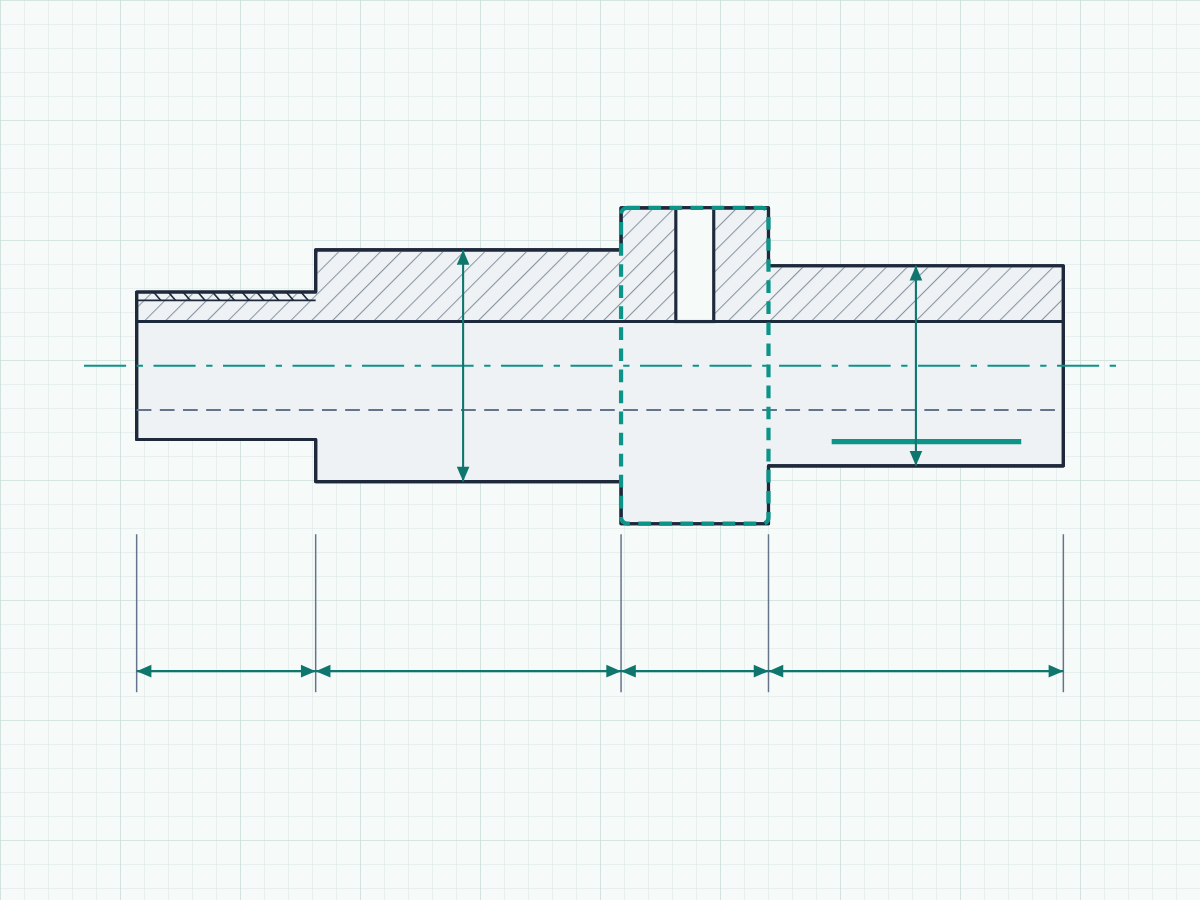
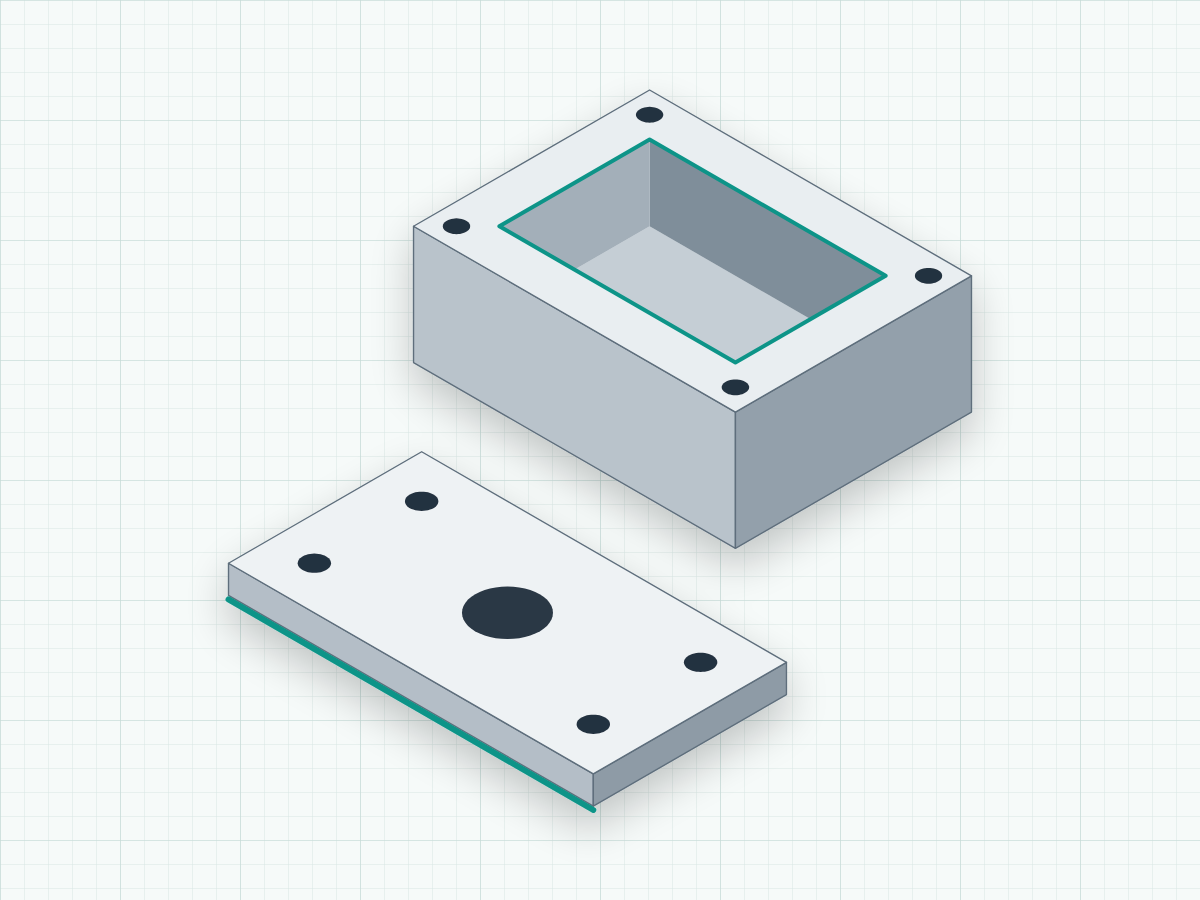
Electroless nickel gives an even, hard, corrosion-resistant layer on any geometry, at a higher cost than electroplating. Its limits: it copies the surface beneath and needs a dimensional allowance.
| Consideration | Recommendation | Why |
|---|---|---|
| Dimensional allowance | Allow the full thickness per surface | A bore shrinks by twice the thickness |
| Thickness for the environment | 5 µm mild, 13 µm moderate, 25 µm severe | Service conditions in ASTM B733 |
| Maximum hardness | Specify heat treatment | Raises hardness, slightly lowers corrosion resistance |
| High-strength steel | Specify a bake after plating | Prevents hydrogen embrittlement |
| Faces that stay bare | Mark them for masking | Masking adds hand work |
| Surface roughness | Machine to the roughness you need | The layer copies tool marks |
| Drawing callout | "Electroless nickel per ASTM B733, 13 µm min., mid phosphorus" | One line gives us all we need |
Electroless Nickel Compared with Related Finishes
Electroless nickel is often weighed against these finishes, or combined with them, and all of them are done in our own factory.
Electroplating
Electrolytic nickel, zinc or chrome plating costs less, but builds up on edges and thins in holes. Choose electroless nickel for complex shapes and tight tolerances.
- Coverage
- Thicker on edges, thinner in holes
- Cost
- Lower
Black Oxide
Black oxide adds almost no thickness and gives a low-glare black, but its corrosion protection is mild and relies on oil; electroless nickel protects far better.
- Thickness
- Under 1.5 µm
- Corrosion resistance
- Mild, relies on oil
Teflon Coating
PTFE particles can be co-deposited in electroless nickel, or PTFE applied over it, to lower friction and add release properties for molds, valves and sliding parts.
- With electroless nickel
- Co-deposit or topcoat
- Benefit
- Lower friction, easier release
Heat Treatment
Heating plated parts to about 400 °C hardens the nickel-phosphorus layer to roughly 900–1,000 HV, close to hard chrome. A lower-temperature bake after plating protects high-strength steels against hydrogen embrittlement.
- With electroless nickel
- After plating
- Result
- Maximum hardness or embrittlement relief
Sand Blasting
Sand blasting is our standard pretreatment before electroless nickel. It cleans the surface for adhesion and evens out tool marks, which the nickel would otherwise copy exactly.
- With electroless nickel
- Standard pretreatment
- Result
- Even matte base, better adhesion
Ask for combined finishes in one request: we plan the order of blasting, plating, heat treatment and masking, so every finish on the part is done in one place.
Electroless Nickel FAQs
How is electroless nickel different from electrolytic nickel plating?
Electrolytic nickel uses current, so the layer is thickest on edges and thinnest in holes. Electroless nickel uses a chemical reaction, so the thickness is even wherever the solution reaches, and the phosphorus adds hardness and corrosion resistance. Electrolytic nickel is cheaper for simple parts.
How long does an electroless nickel coating last?
It depends on the environment, thickness and wear. Indoors, a thin layer lasts the life of the part; in moisture, salt or chemicals, a thicker high-phosphorus layer lasts many years. Abrasion usually limits its life, so size the thickness for the worst conditions.
What are the limitations of electroless nickel?
It costs more than electrolytic plating, because the bath is consumed and needs close control. It copies the surface beneath, so machining marks stay visible, and it is not a cosmetic finish. Some substrates need special pretreatment, and high-strength steels need a bake after plating.
What thickness tolerance can electroless nickel hold?
About ±2.5 µm (±0.0001 in) on a given thickness, on outside faces and inside bores alike. That makes it suitable for precision fits, as long as the drawing allows for the coating, for example by giving bore sizes after plating.
How hard is electroless nickel?
As plated, about 450–600 HV for mid- and high-phosphorus grades. Heat treatment at about 400 °C for an hour, which we do in our own factory, raises it to roughly 900–1,000 HV, close to hard chrome, at some cost in corrosion resistance. Specify the hardness you need on the drawing.
How long does plating take?
The bath deposits about 10–20 µm per hour, so a typical 5–15 µm layer takes about 30 minutes to an hour, and thicker layers up to a few hours. Cleaning, pretreatment, masking and any bake add time, which we confirm with your quote.
Can electroless nickel parts be stripped and replated?
Yes. The old layer is dissolved in a stripping solution, and the part is cleaned, activated and plated again. Parts are always stripped first, because plating over an old layer gives poor adhesion. Stripping can etch the base metal slightly, so tell us about critical dimensions.
How do I specify electroless nickel on my drawing?
Give the standard, minimum thickness and phosphorus range, for example "Electroless nickel per ASTM B733, 13 µm min., mid phosphorus", plus any heat treatment for hardness. Mark the faces to be masked and state whether dimensions apply before or after plating.
How do I get a quote for nickel-plated parts?
Send a STEP or IGES model and a PDF drawing with the material, quantity and plating callout. An engineer reviews every request and quotes within 24 hours, simple parts often in 2–4 hours, with free DFM feedback. There is no minimum order quantity, and a CMM report is free of charge for the dimensions you specify.
Get a Quote for Nickel-Plated Parts
Send us your models and drawings with the plating callout. We make and plate the parts in our own factory, and our engineers reply with a detailed quote and free DFM feedback within 24 hours.

Jane
BOHUI PROTOTYPES LIMITED
Tell me the material, the quantity, the thickness and phosphorus range you need, and point out any faces that must stay bare.
You can send your request first and add files later by email or WhatsApp. For confidential designs, contact me before sharing your files.
Jane
BOHUI PROTOTYPES LIMITED
- Address: Xiaobian Street, Chang'an Town, Dongguan City, Guangdong Province, China
Request a Quote
Fields marked are required.