
Teflon (PTFE) Coating Services
A non-stick, low-friction and chemically resistant coating for metal parts that slide, release or face aggressive media.
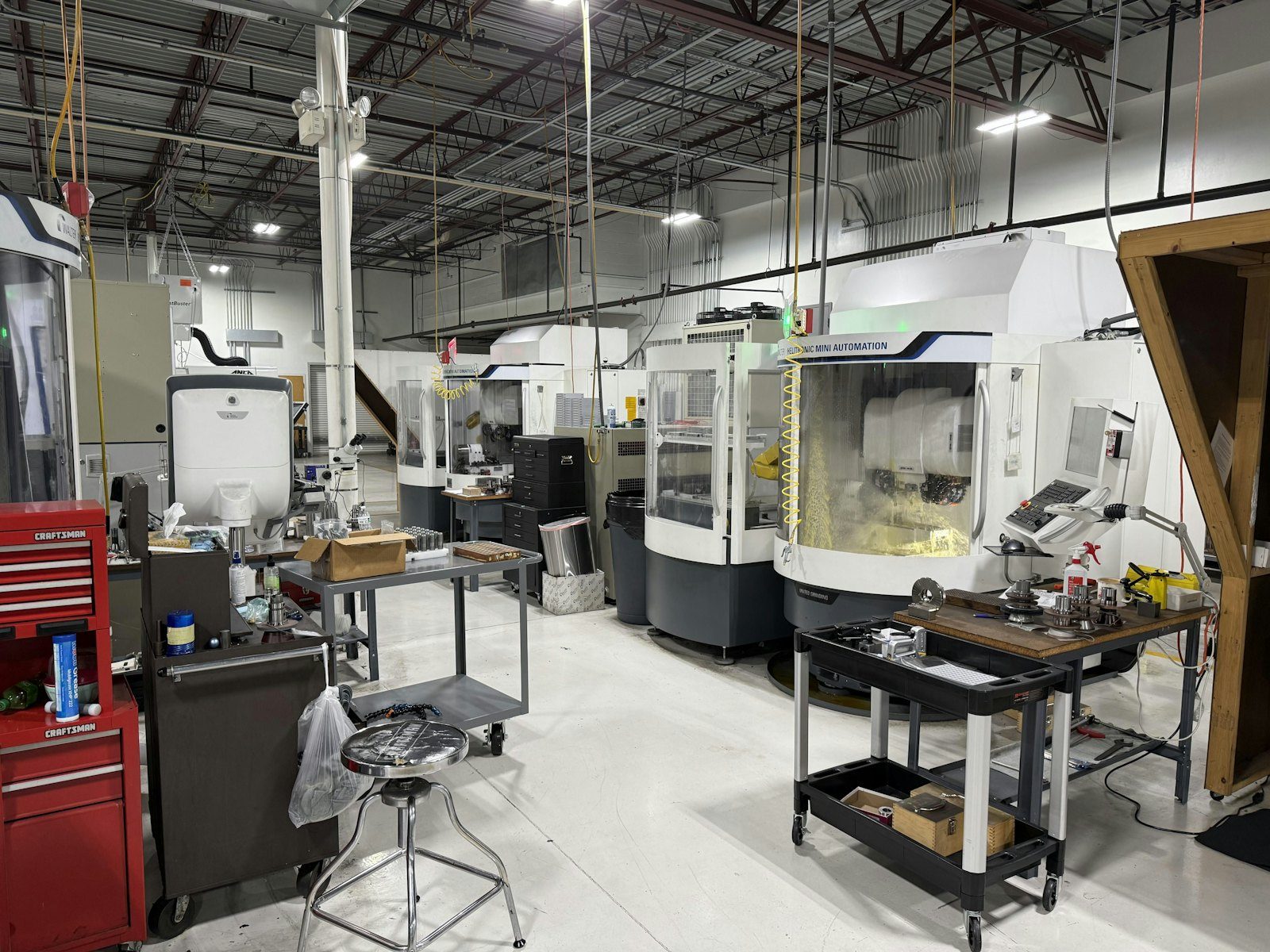
We apply PTFE-based coatings in our own factory to CNC machined and sheet metal parts in aluminum, steel and stainless steel, in natural, black, gray and other colors, typically 5–25 µm thick. Every quote is reviewed by an engineer within 24 hours, simple parts often in 2–4 hours, and there is no minimum order quantity.
What Is Teflon Coating?
Teflon coating is the common name for coatings based on polytetrafluoroethylene (PTFE) and related fluoropolymers. Teflon™ is a trademark of Chemours, but the name is widely used for the whole family. A thin fluoropolymer layer gives a part a non-stick, low-friction surface that resists heat, chemicals and moisture and insulates electrically.
Adhesion is the challenge with a material that nothing sticks to. Parts are degreased and grit blasted to roughen the surface, a primer is applied, and the PTFE coating is sprayed or, for small parts, dipped and spun. The coating is then baked at high temperature, which fuses the particles into a continuous film bonded to the primer.
The result has one of the lowest friction coefficients of any solid. It releases sticky materials, is easy to clean and resists most acids, bases and solvents. PTFE is soft, though, so for abrasive wear it is combined with a hard base finish or a reinforced coating.
Teflon Coating Specifications
These are typical values for planning; the exact figures depend on the coating system, which we apply and cure in our own factory. Put the coating type, color, thickness and coated areas on your drawing, and we confirm them in your quote.
| Property | Specification | Notes |
|---|---|---|
| Materials | Aluminum, steel, stainless steel | Also plastics, glass, rubber and ceramics; the cure must suit the substrate |
| Coating thickness | Typically 5–25 µm | Thicker multi-coat systems for chemical duty |
| Colors | Black, gray, green, blue, red, brown and natural | Natural PTFE is off-white |
| Appearance | Smooth, satin to glossy surface | Gloss depends on the coating system |
| Service temperature | −240 °C to 260 °C for PTFE | FEP and dry films are lower; tell us your temperature |
| Friction coefficient | About 0.05–0.20 | Depends on load, speed and the mating surface |
| Electrical | Insulating | Mask faces that must stay conductive |
| Pretreatment | Degreasing, grit blasting, primer | Adhesion depends on surface preparation |
Benefits of Teflon Coating
A thin PTFE film changes how a part behaves in contact with other materials. These are the reasons parts are PTFE-coated; the points to plan for are in the design considerations further down.
Adhesives, food, plastics, labels and other sticky materials do not hold on the coated surface, so they release cleanly from trays, sealing jaws, chutes and molds instead of building up.
Deposits wipe off a non-stick, non-wetting film, so coated machine and equipment parts need less cleaning time and fewer solvents and stay in service longer between maintenance stops.
PTFE is almost completely inert to acids, bases, solvents and industrial chemicals, so the coating protects surfaces that are exposed to aggressive media and strong cleaning agents.
PTFE coatings run continuously up to 260 °C (500 °F) and keep their non-stick properties across that range, down to about −240 °C at the cold end.
One of the lowest friction coefficients of any solid reduces wear and the need for oil or grease on sliding parts, which improves the performance and the service life of moving components.
The coating bonds to metals and also to plastics and glass, as long as the surface is prepared and the part withstands the cure. We check the substrate with every quote.
Teflon Coating Types
Fluoropolymer coatings differ in how dense, how hot-running and how hard-wearing they are. Tell us what the coating must do, and we choose the system with you.
PTFE Coatings
Classic one- or two-coat PTFE gives the lowest friction and the highest service temperature of the family, up to about 260 °C. The thin film is slightly porous, so it suits non-stick and low-friction duty rather than a corrosion barrier on its own.
- Service temperature
- Up to about 260 °C
- Best for
- Non-stick and sliding surfaces
FEP and PFA Coatings
These melt-processable fluoropolymers flow into a dense, pore-free film during baking, which gives better chemical and permeation resistance than PTFE. PFA works up to about 260 °C and FEP up to about 205 °C, and both can be built up thicker.
- Service temperature
- FEP about 205 °C, PFA about 260 °C
- Best for
- Chemical resistance, linings
PTFE Dry-Film Lubricants
PTFE particles in a resin binder form a thin, hard-wearing lubricating film that cures at lower temperatures. It is the usual choice for fasteners, threads, hinges, slides and other moving parts that need a clean, dry lubricant that lasts.
- Thickness
- Typically 5–25 µm
- Best for
- Fasteners, threads, sliding parts
Materials for Teflon Coating
PTFE coatings need a substrate that withstands grit blasting and the bake. Our engineers check the grade, its heat treatment and the operating conditions with every quote. Material certificates are available on request.
Metals
Aluminum, carbon and alloy steel and stainless steel, machined or fabricated.
Aluminum
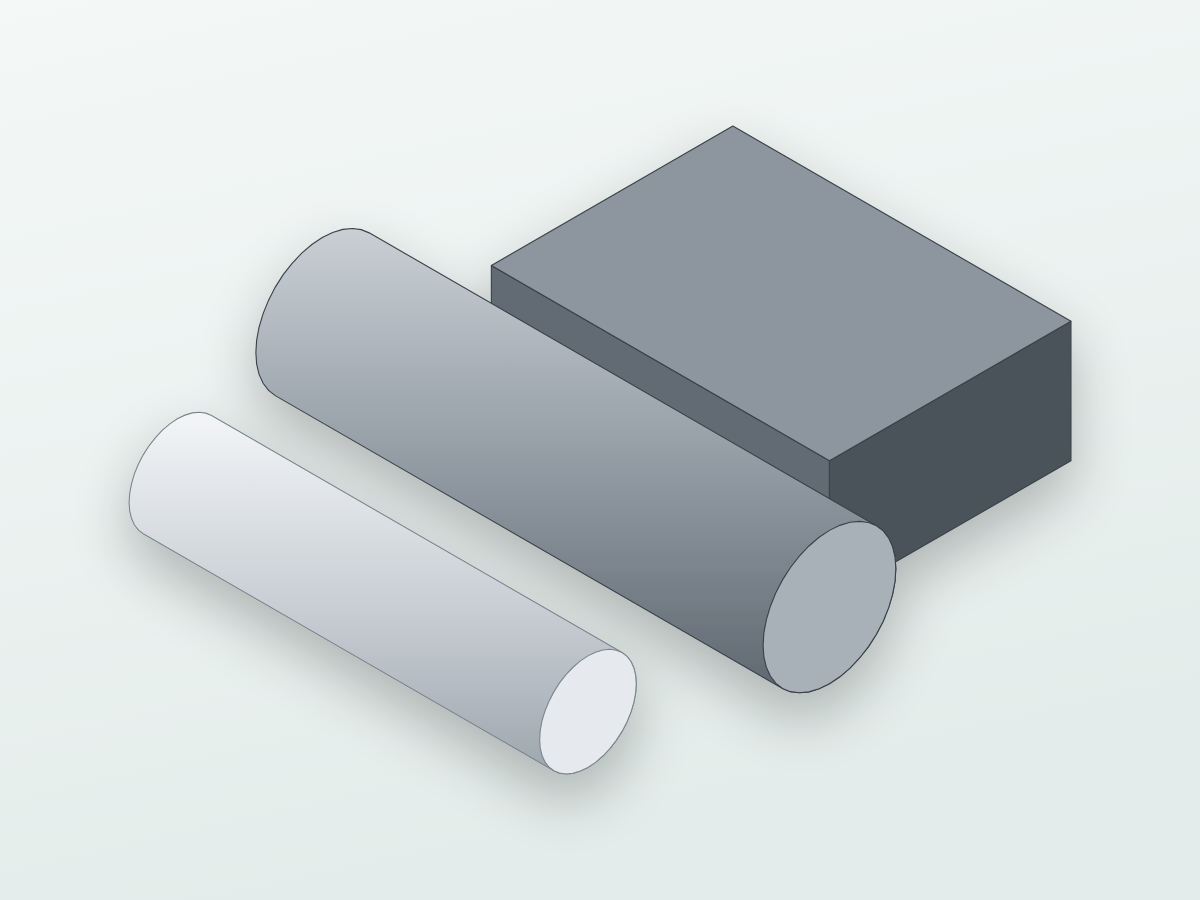
Aluminum is light and conducts heat well, which suits non-stick trays, rollers and housings. A full PTFE bake is hot enough to soften heat-treated grades such as 6061-T6 and 7075-T6, so a low-cure system is chosen or the strength you need is confirmed first.
Watch out for
Loss of temper during the bake
Typical parts
Rollers, trays, chutes, molds, housings
Carbon and Alloy Steel
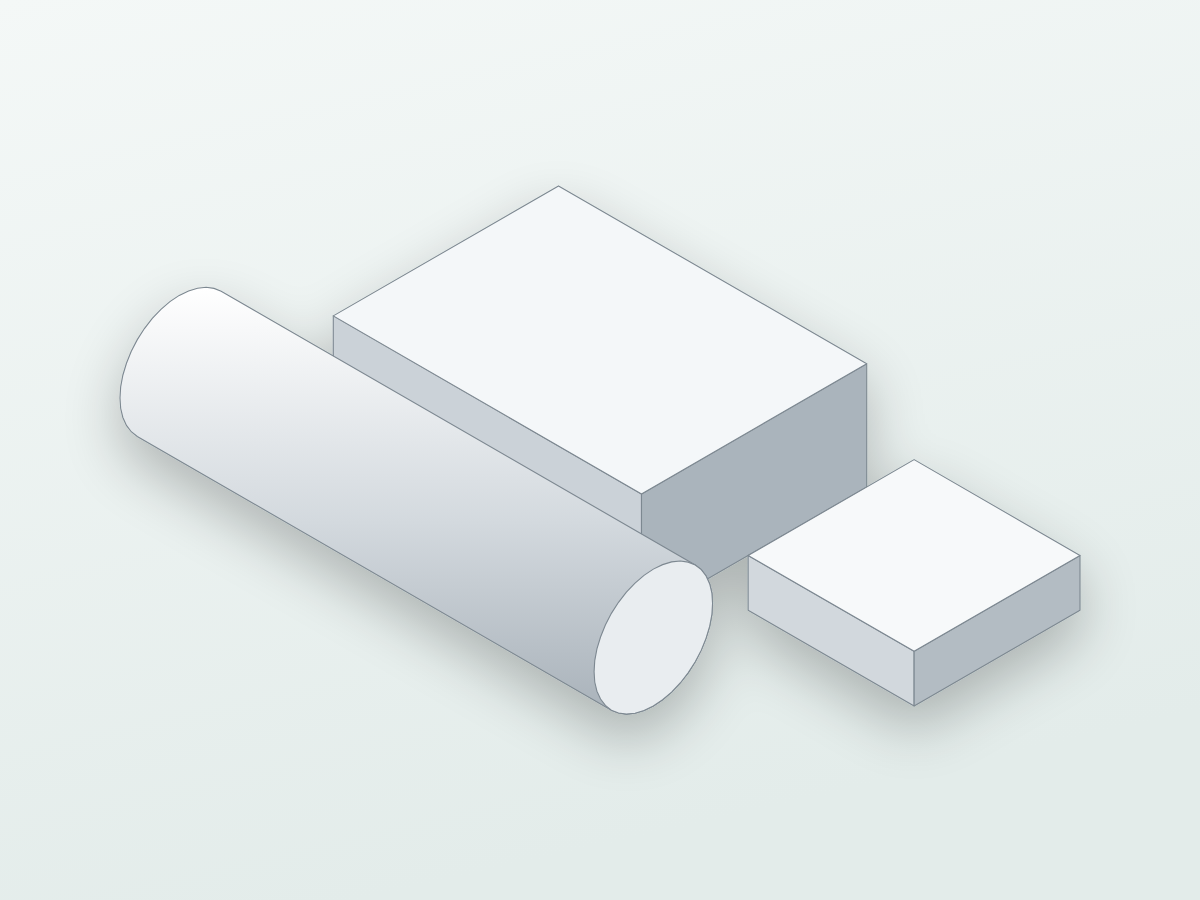
Steel is strong and inexpensive, and a PTFE coating adds release and lubricity. Because thin PTFE films are slightly porous, steel parts that face moisture often get a zinc or nickel base layer or a dense FEP or PFA system.
Watch out for
Rust under thin, porous films
Typical parts
Fasteners, blades, sealing jaws, machine slides, valve parts
Stainless Steel
Stainless steel resists corrosion under and around the coating, so it is the first choice for food, chemical and medical equipment parts. Its smooth surface is grit blasted before priming so that the coating bonds firmly.
Watch out for
Adhesion on smooth, unblasted surfaces
Typical parts
Food machine parts, pump and valve parts, instrument parts
Teflon Coating Applications
PTFE coatings are chosen where things must not stick, must slide without oil or must resist media that would attack bare metal.
Industrial Automation
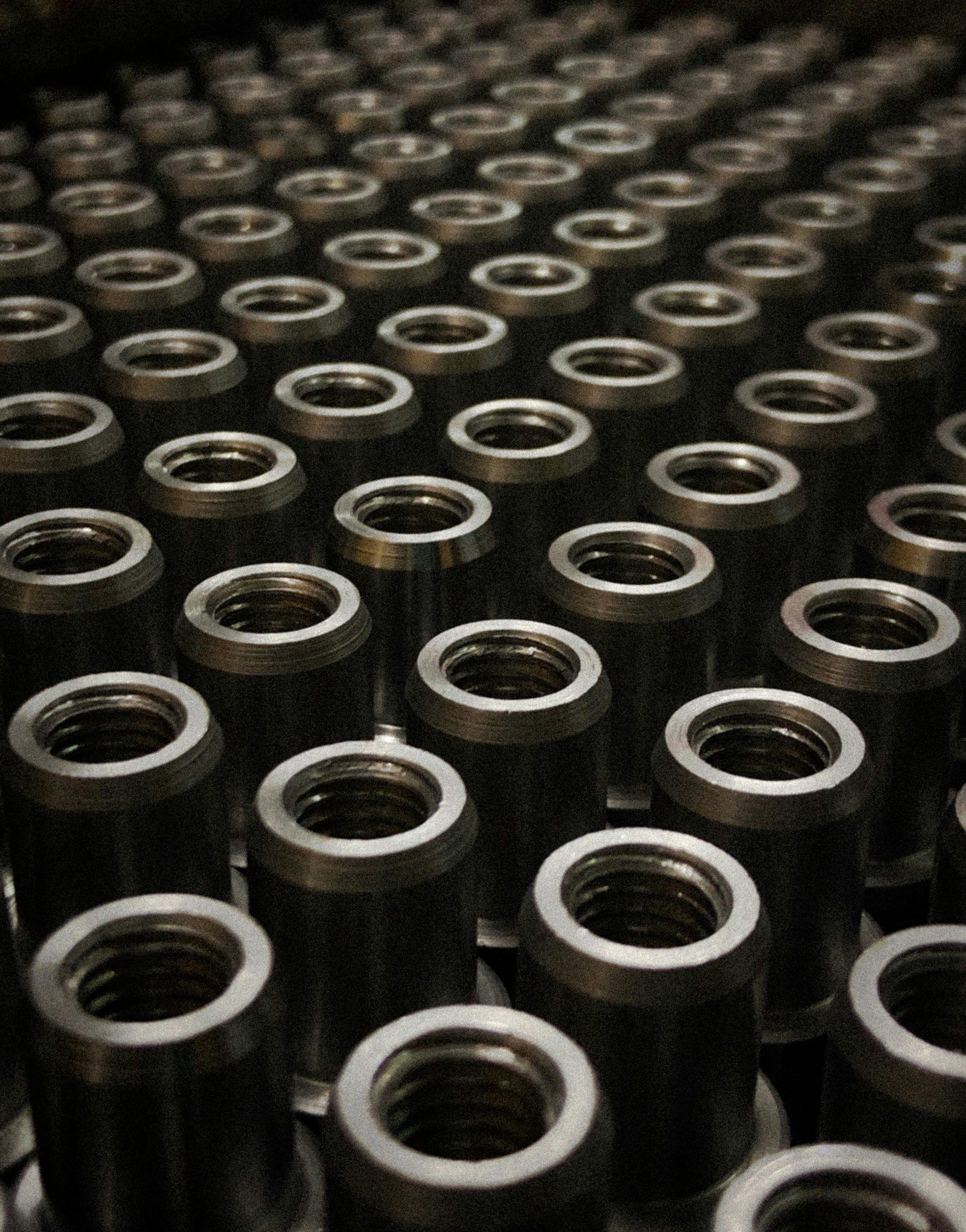
Chutes, guides, rollers, cutting blades, sealing jaws and packaging machine parts are coated so that adhesives, food, plastics, films and labels release cleanly and slide without oil or grease, which keeps machines running and cleaning short.
- Typical parts
- Chutes, guide rails, sealing jaws, rollers, blades, hoppers
Energy
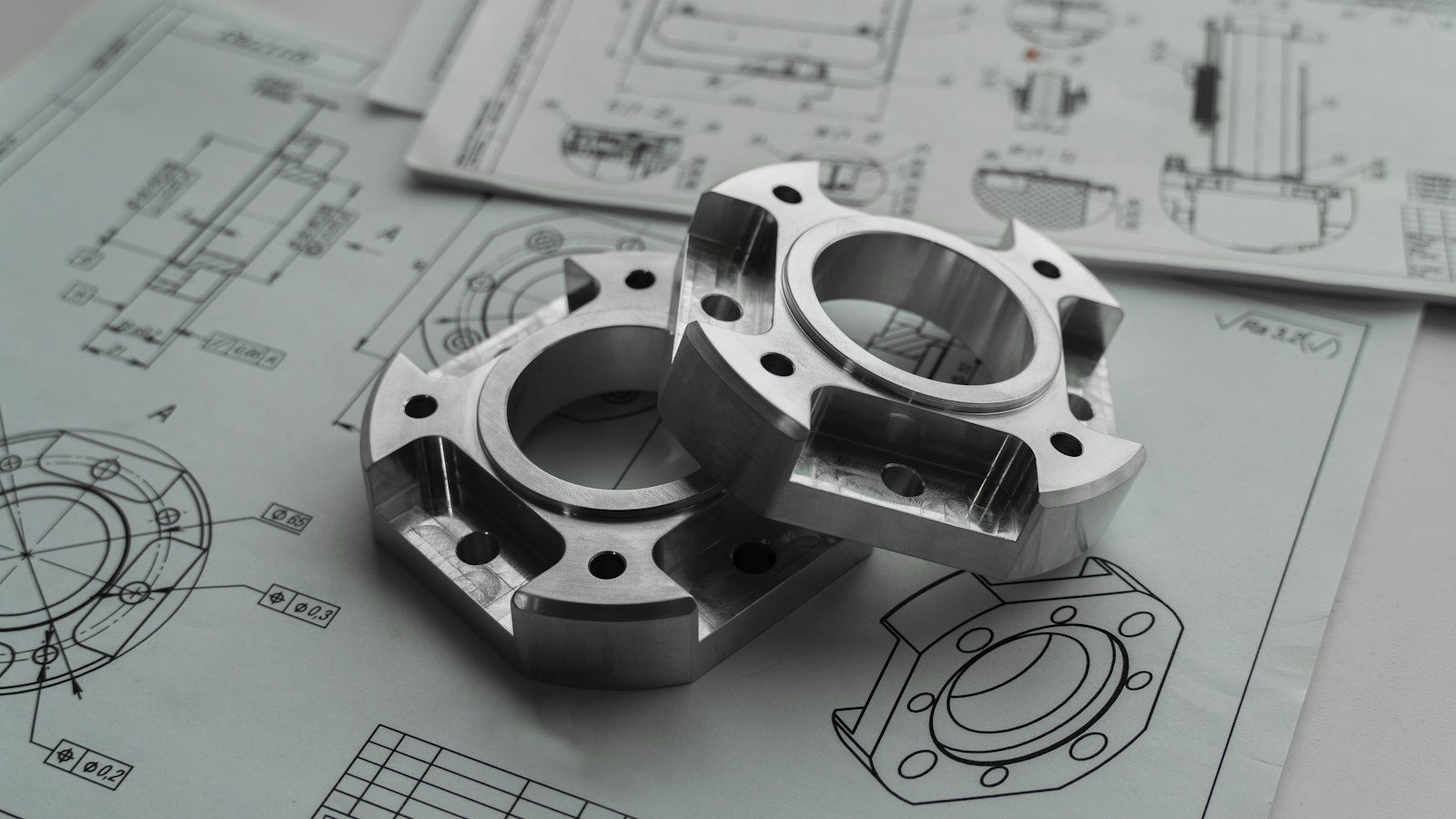
Valves, fittings, pump components and fasteners in oil, gas, chemical and power equipment are coated against corrosive media, sticking and galling, which keeps moving parts free and makes maintenance simpler and faster.
- Typical parts
- Valve parts, fittings, pump components, fasteners, seal housings
Medical Devices
Instrument parts, guides and fixtures receive a smooth, low-friction, non-wetting coating that is easy to clean and withstands common disinfectants. The coating system is confirmed for the intended medical use before production.
- Typical parts
- Instrument parts, guides, fixtures, device components
Design Considerations for PTFE-Coated Parts
A PTFE coating performs only as well as the part under it allows. These points help you get a durable, even film, and our free DFM review flags anything that adds risk before production.
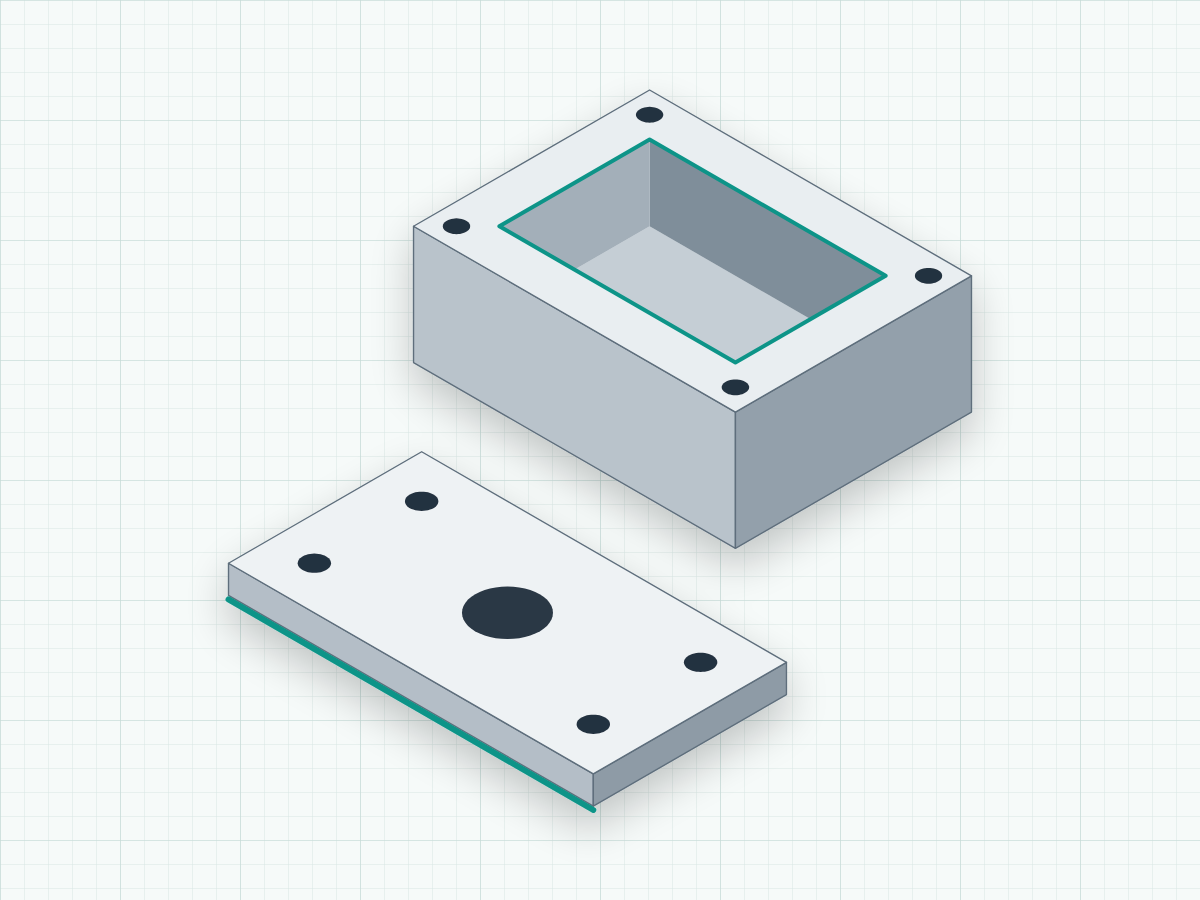
| Consideration | Recommendation | Why |
|---|---|---|
| Thickness allowance | Allow 5–25 µm per surface, more for thick systems | Fits and threads tighten after coating |
| Edges | Break or round sharp edges | The film thins and wears first on sharp edges |
| Bake temperature | Check that the part tolerates the cure | Heat-treated aluminum can lose strength; low-cure systems exist |
| Masking | Mark threads, bores, bonding and grounding faces | PTFE insulates, and adhesives do not bond to it |
| Wear | Choose a reinforced system or a hard base for abrasion | PTFE itself is soft and wears under grit |
| Corrosion | Add a corrosion-resistant base where needed | Thin PTFE films are slightly porous |
| Food or medical use | State it with your request | Compliance depends on the coating product |
| Callout | Coating type, color, thickness and coated areas | One line defines the finish |
Teflon Coating Compared with Related Finishes
PTFE is often weighed against, or combined with, these finishes, and we do all of them in our own factory. Each card shows where the other finish fits better and how it works with a PTFE coating.
Electroless Nickel Plating
Electroless nickel gives a hard, wear-resistant layer of even thickness on every surface. Nickel-PTFE composite coatings co-deposit PTFE particles in the nickel, combining that hardness with dry lubricity.
- Hardness
- Far harder than PTFE alone
- With PTFE
- Nickel-PTFE composite layer
Anodizing
Hard anodizing gives aluminum a hard, wear-resistant oxide, and sealing or impregnating it with PTFE adds lubricity. The combination suits pistons, slides and guides that need hardness and low friction together.
- Base
- Hard anodizing on aluminum
- With PTFE
- PTFE-sealed hard anodizing
Sand Blasting
Grit blasting cleans and roughens the metal before coating, giving the primer and the PTFE film the anchor they need. Without it, a non-stick coating would not stick to the part either.
- Role
- Surface preparation before priming
- Media
- Aluminum oxide
Electroplating
On steel parts that face moisture, a zinc or nickel plated base layer carries the corrosion protection that a thin, slightly porous PTFE film cannot give alone, while the PTFE topcoat adds release and lubricity.
- Base
- Zinc or nickel on steel
- With PTFE
- Corrosion-resistant base under the film
Powder Coating
Powder coating builds a thick, tough color layer for frames, covers and enclosures. Choose it for impact and weather protection, and PTFE where a thin film must release, slide or resist chemicals.
- Thickness
- Typically 60–120 µm
- Versus PTFE
- Thicker and tougher, not non-stick
A PTFE coating is often one layer of a system: a blasted surface, a primer, sometimes a hard or corrosion-resistant base, then the fluoropolymer. Tell us what the part faces, and we suggest the complete system.
Teflon Coating FAQs
Is Teflon coating the same as PTFE coating?
Teflon™ is a Chemours brand name for PTFE and other fluoropolymer coatings, and the word is widely used for the whole family. Several manufacturers make PTFE, FEP and PFA coatings with comparable properties, so a branded product is not necessary for most applications. If your specification names a particular coating product, state it on the drawing, and we confirm whether it can be used.
Does a PTFE coating conduct electricity?
No. PTFE is an excellent electrical insulator, so a coated surface does not conduct, which is useful for insulating parts, wire guides and components near live circuits. If some faces must stay conductive, such as grounding points or contact surfaces, mark them on the drawing for masking. Conductive grades with special fillers exist but have different properties.
How much heat and cold can a PTFE coating withstand?
PTFE coatings work continuously from about −240 °C up to 260 °C (500 °F) and keep their non-stick properties in that range. Above 260 °C the coating starts to degrade, loses its non-stick behavior and can release harmful fumes, so it must not be overheated. FEP and many dry-film lubricants have lower limits. Tell us the operating temperature, and we choose the system to match.
How thick is a PTFE coating?
Most PTFE and dry-film coatings are about 5–25 µm thick. Thinner films keep tight fits and provide lubricity and release, while thicker films last longer under wear. Dense FEP and PFA systems for chemical resistance can be built up considerably thicker in several coats. Allow for the thickness on fits and threads, or mark them for masking.
Is a PTFE coating resistant to chemicals and corrosion?
PTFE itself is almost completely inert to acids, bases, solvents and industrial chemicals. A thin PTFE film is slightly porous, however, so its corrosion protection depends on the whole system: stainless steel substrates, a corrosion-resistant base layer or a dense, thicker FEP or PFA coating give the best results in aggressive environments. Tell us the media and the temperature.
How well does a PTFE coating resist wear?
PTFE has very low friction but is soft, so it wears under abrasive particles, sharp edges and high loads. For sliding parts, reinforced PTFE systems, dry-film lubricants or a hard base such as hard anodizing or electroless nickel extend its life considerably. Avoid scraping coated surfaces with metal tools, and design rounded edges where the coating meets contact.
Can PTFE-coated parts be used for food contact or medical applications?
Food-contact and medical coating grades exist, and current PTFE coatings are made without PFOA. Whether a coated part complies depends on the coating product and the rules of your market, so state the intended use and the regulations with your request. Compliance documents are provided on request, depending on the coating and supplier, and medical and export requirements are confirmed before production.
How do I specify a PTFE coating on my drawing?
Give the coating type, color, thickness and coated areas, for example "PTFE coating, black, 15–25 µm, all surfaces except threads and face B". Add the operating temperature, the media the part faces and any food or medical use. If you only know the function, such as release, low friction or chemical resistance, describe it, and our engineers suggest the system.
How do I get a quote for PTFE-coated parts?
Send a STEP or IGES model with a PDF drawing that shows the material, quantity and coating requirements. An engineer reviews every request and sends a detailed quote within 24 hours, simple parts often in 2–4 hours, with free DFM feedback on edges, masking and the coating system. There is no minimum order quantity.
Get a Quote for PTFE-Coated Parts
Send us your models and drawings with the coating type and the areas to coat. We make and coat the parts in our own factory, and our engineers reply with a detailed quote and free DFM feedback within 24 hours.

Jane
BOHUI PROTOTYPES LIMITED
Tell me the material, the coating type or function, the operating temperature and the quantity, and point out the faces that must stay bare or conductive.
You can send your request first and add files later by email or WhatsApp. For confidential designs, contact me before sharing your files.
Jane
BOHUI PROTOTYPES LIMITED
- Address: Xiaobian Street, Chang'an Town, Dongguan City, Guangdong Province, China
Request a Quote
Fields marked are required.