
Heat Treatment Services
Hardening, tempering, annealing, stress relieving, vacuum and bright heat treatment that give machined metal parts the hardness, strength and stability their job requires.
We heat treat CNC machined parts in carbon, alloy, tool and stainless steels and aluminum alloys in our own factory, to the process on your drawing, and plan the machining sequence around it. There is no minimum order, and an engineer will quote within 24 hours, simple parts often in 2–4 hours.
What Is Heat Treatment?
Heat treatment changes the properties of a metal part without changing its shape. The part is heated to a set temperature, held there until its microstructure has changed through the whole section, then cooled at a controlled rate. Depending on the cycle, the same steel can come out hard and wear resistant, tough and shock resistant, or soft and easy to machine.
In steel, heating above the transformation range turns the structure into austenite. Quenching in oil, water, polymer or gas traps it as hard, brittle martensite, and tempering at a lower temperature then trades some hardness for toughness. Slow cooling in the furnace or in air gives the softer, more even structures of annealing and normalizing. Aluminum alloys are strengthened by another route: solution treatment followed by aging.
Because heat treatment can cause distortion and scale, it is planned together with the machining: parts are usually rough machined, heat treated, then finish machined or ground on critical features. Our engineers choose the cycle from your material grade and target hardness.
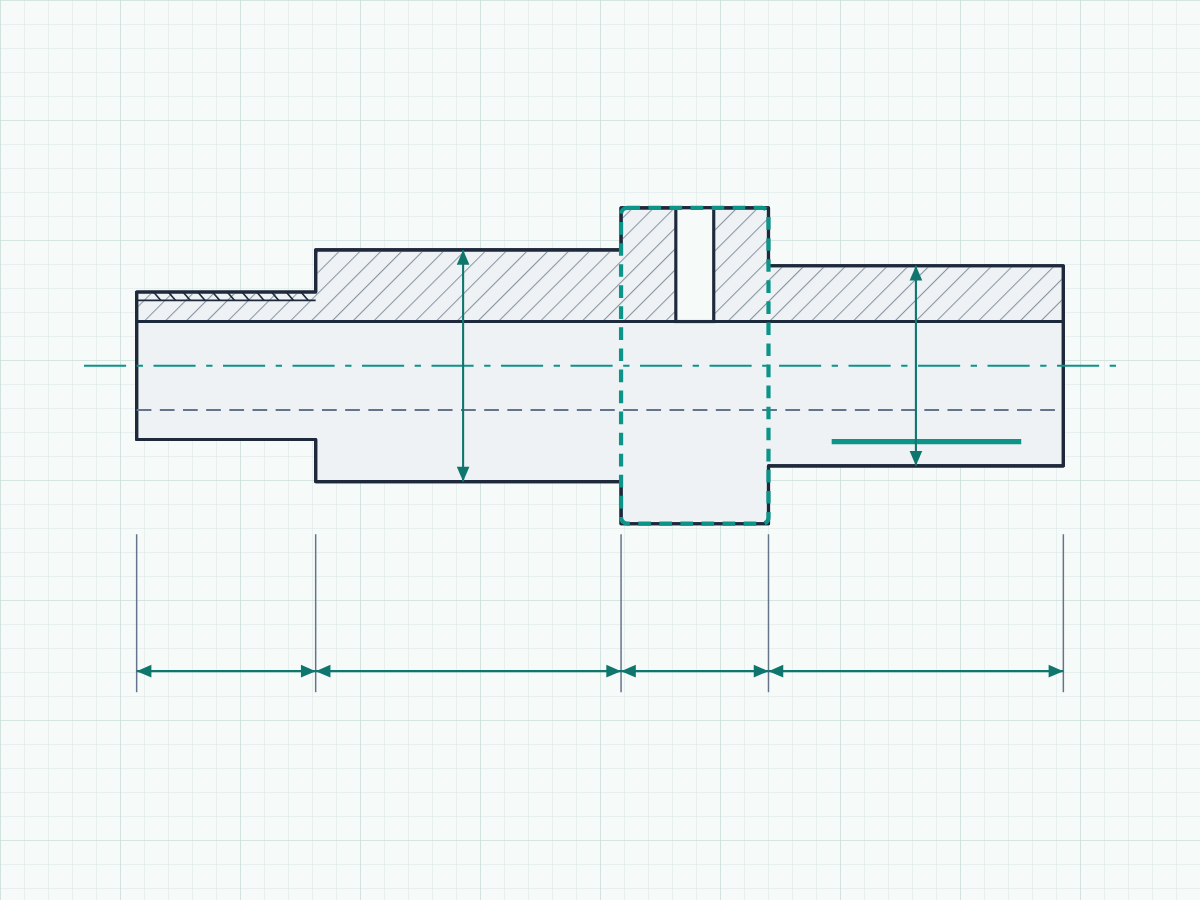
Heat Treatment Specifications
Typical values for the processes we run in our own factory. The cycle and the achievable hardness depend on the exact grade and the size of the part; give your target on the drawing, and we confirm it in your quote.
| Property | Specification | Notes |
|---|---|---|
| Vacuum hardening | 48–60 HRC | Tool and alloy steels; a thin dark film may remain until the part is ground |
| Bright heat treatment | 42–58 HRC at the surface | Hard case over a softer core; bright, scale-free surface |
| Hardening and tempering | Hardness range to your drawing | Set by the grade and the tempering temperature |
| Annealing and normalizing | Softened or refined structure | Before machining, after forming or welding |
| Stress relieving | Below the transformation range | Between rough and finish machining; little change in hardness |
| Temperature control | About ±5 to ±15 °C | Tighter at low tempering and aging temperatures |
| Materials | Carbon, alloy, tool and stainless steels, cast iron, aluminum alloys | Austenitic stainless steels can only be annealed, not hardened |
| Hardness callout | A range in HRC or HV, for example 56–60 HRC | Mark where the hardness may be tested |
Advantages of Heat Treatment
Vacuum and bright heat treatment add their own advantages to the basic processes. The points to plan for, such as distortion and grinding stock, are in the design considerations further down.
Hardening raises the hardness and strength of steel parts, up to about 60 HRC on tool steels, so they carry load and resist wear; tempering then sets the toughness to match.
Precise furnace temperature control, typically within about ±5 to ±15 °C, and controlled cooling give the same hardness from part to part and from batch to batch.
Vacuum and protective-atmosphere furnaces keep oxygen away from the part, so it does not scale or lose carbon and leaves the furnace clean, with a purer surface.
Uniform heating through the whole section and gentle gas quenching keep distortion and warping low, which matters most for long, thin and precision parts.
A hard surface or case improves wear resistance, fatigue strength and toughness, so gears, pins and tools last longer in service before they need replacing.
Stress relieving and repeated tempering stabilize the structure, so parts keep their dimensions after finish machining and in use; carburizing gives an even case depth and hardness.
Heat Treatment Types
Each process sets a different balance of hardness, strength, toughness and stability, and we run all six in our own factory. Most hardened steel parts receive two of them, for example hardening followed by tempering.
Hardening and Tempering
The part is heated above its hardening temperature, soaked and quenched, which makes medium-carbon, alloy and tool steels hard but brittle. Tempering follows straight away at a lower temperature to relieve quenching stresses and set the final balance of hardness and toughness.
- Typical materials
- 1045, 4140 (42CrMo4), 4340, tool steels
- Result
- Hardness range set by grade and tempering
Annealing
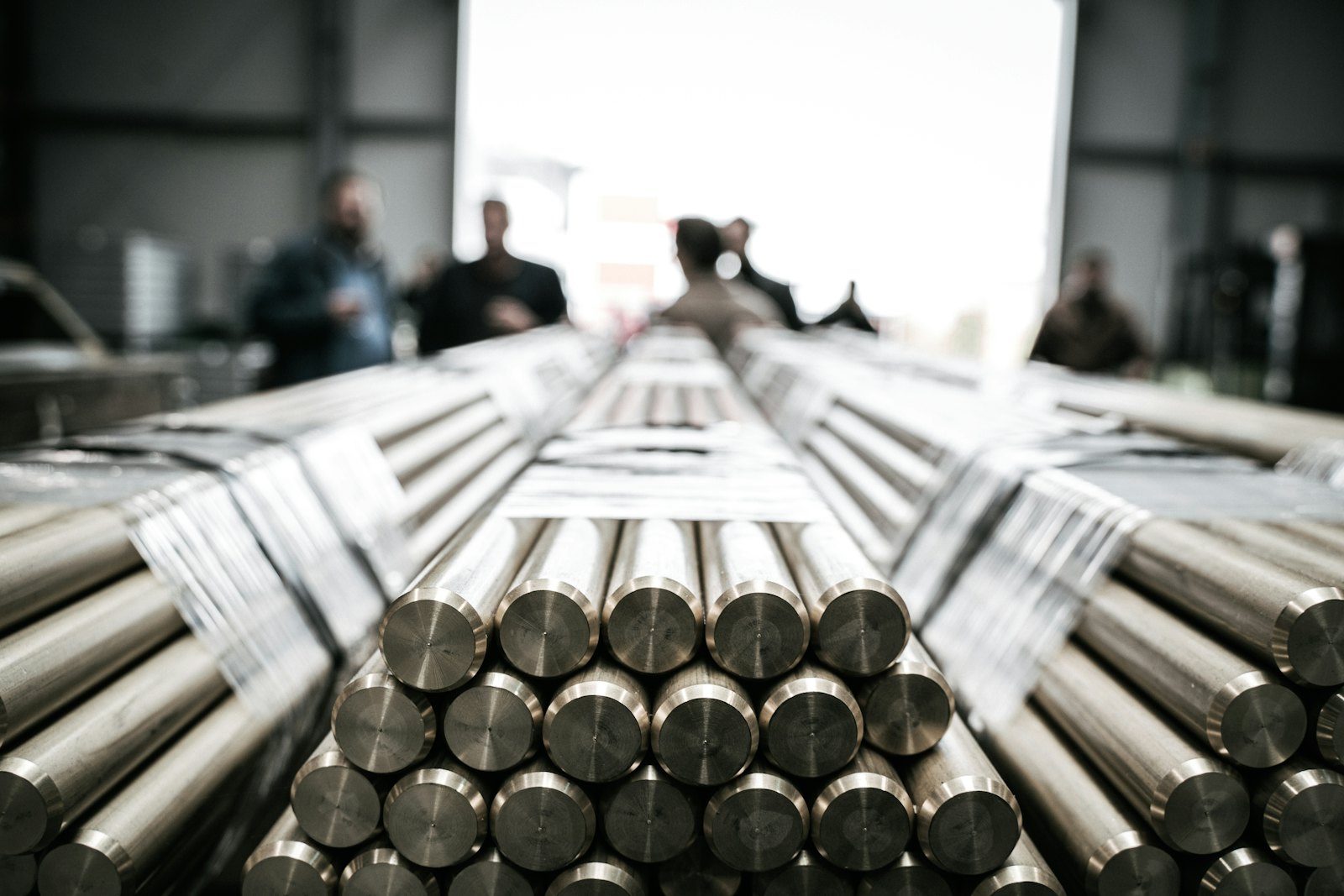
The part is heated, held and cooled slowly in the furnace, so the metal becomes soft, ductile and easy to machine or form, and internal stresses are relieved. Annealing is used before machining hard stock, after cold forming and to restore ductility.
- Result
- Softest, most ductile condition
- Typical materials
- Steels, stainless steels, copper alloys, aluminum
Normalizing
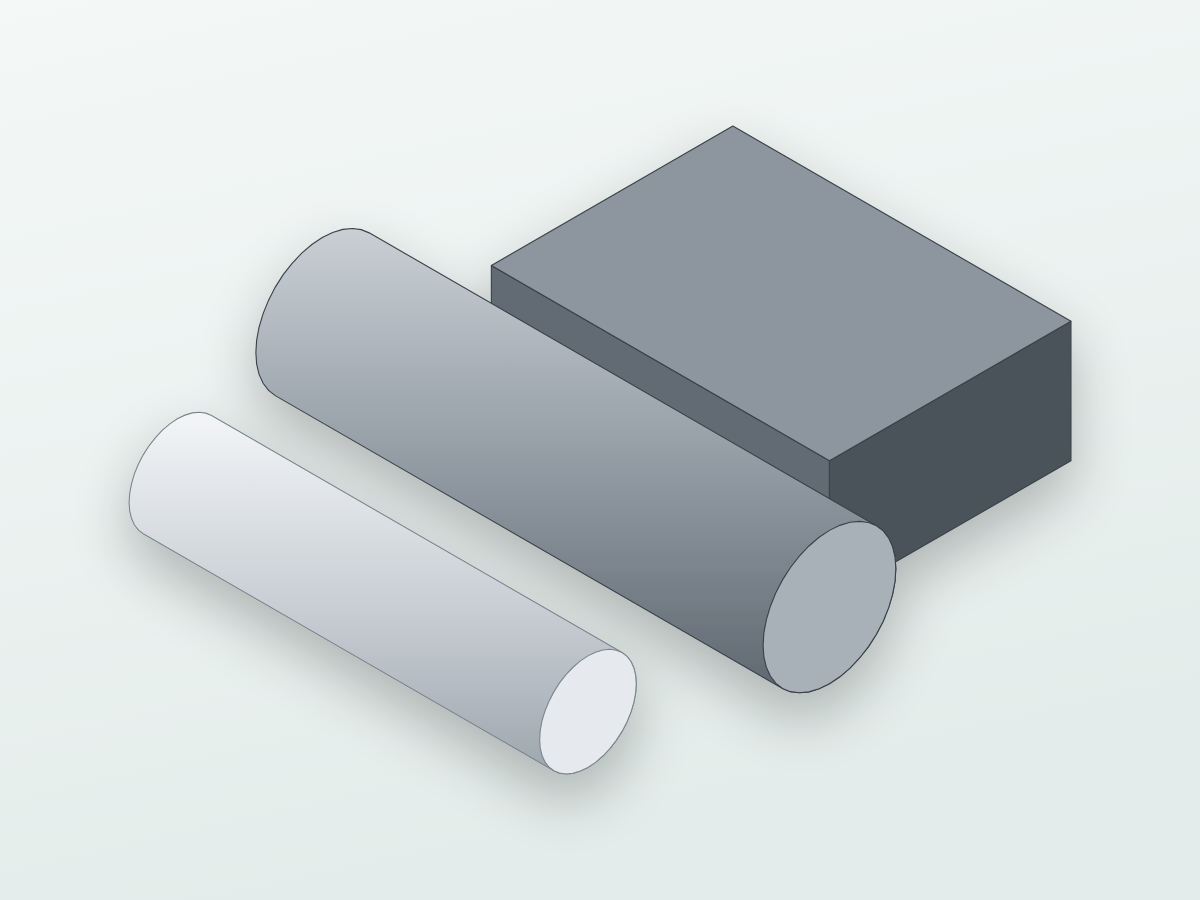
Steel is heated to a similar temperature as for annealing but cooled in still air. The faster cooling gives a finer, more uniform grain and slightly higher strength, which evens out the structure of forgings, castings and welded parts before machining.
- Result
- Fine, uniform grain structure
- Typical materials
- Carbon and low-alloy steels
Stress Relieving
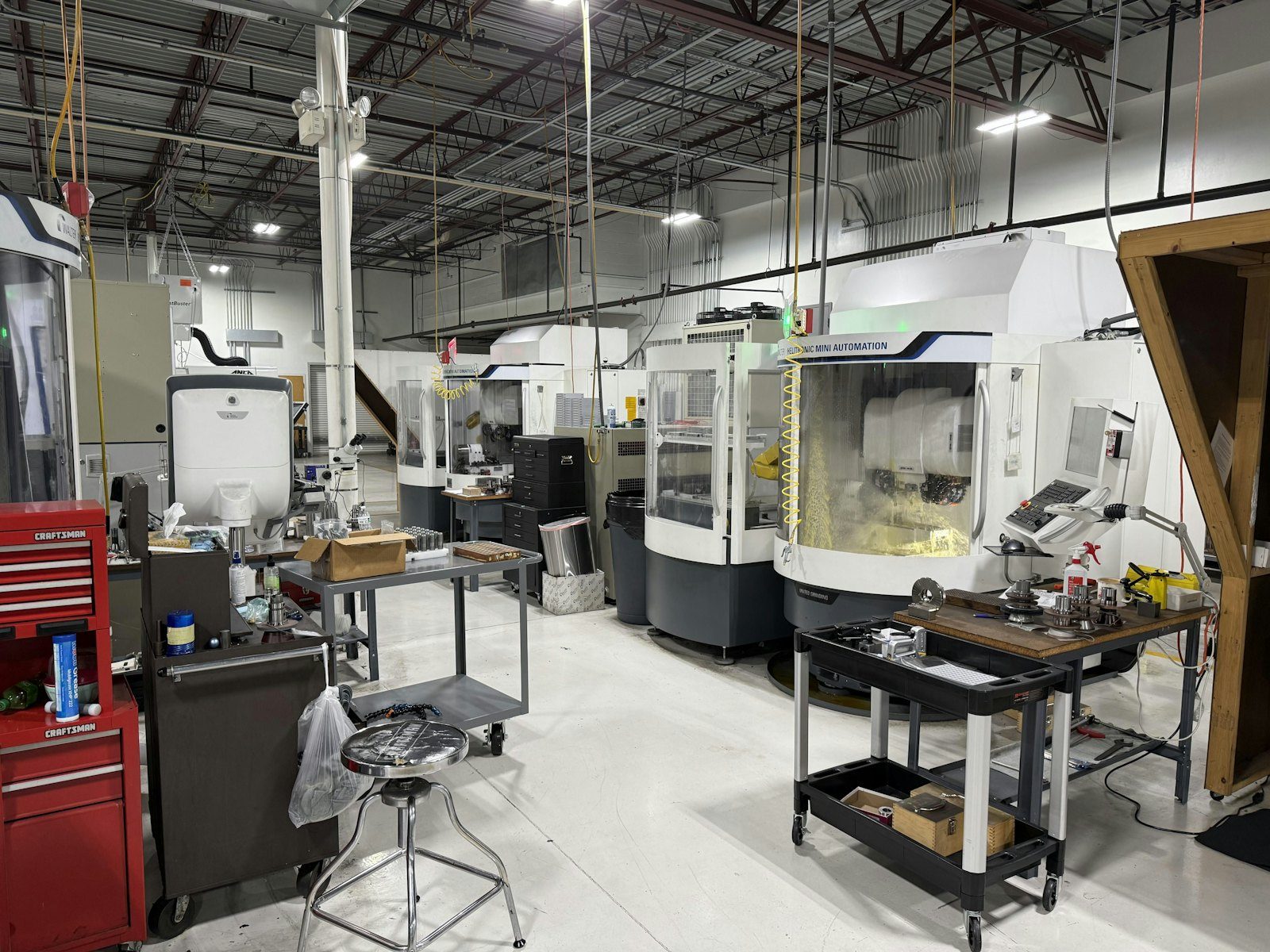
Machining, welding and cold forming leave residual stresses that can make a part move after it is finished. Stress relieving heats the part below the transformation range and cools it slowly, so the stresses relax with little change in hardness.
- Steel
- Typically 550–650 °C for parts that are not hardened
- Best for
- Long, thin, welded or heavily machined parts

Vacuum Heat Treatment
Parts are heated in a vacuum furnace and quenched with pressurized gas, so the surface does not oxidize or lose carbon and heating is very even. Hardness is consistent and distortion low; tool steels are tempered three times for stable hardness, which suits heavily loaded parts. A thin dark film may form, and grinding restores a bright metal surface.
- Hardness
- 48–60 HRC, depending on the steel
- Materials
- Tool and alloy steels, cast iron
Bright Heat Treatment
Parts are heated in a protective atmosphere and leave the furnace bright and free of scale. In gas carburizing, carbon diffuses into low-carbon steel before quenching and forms a hard case over a softer core. It suits cosmetic and wear parts, not heavily loaded structural parts.
- Surface hardness
- 42–58 HRC
- Materials
- Low-carbon and alloy steels, cast iron
Materials for Heat Treatment
The response to heat treatment depends on the alloy. State the exact grade on the drawing, because two steels with similar names can harden very differently; our engineers check it with every quote.
Metals
Material certificates are available on request.
Carbon and Alloy Steels
Medium-carbon and alloy steels are hardened and tempered for shafts, gears and pins. Low-carbon grades such as 8620 or 20CrMnTi are carburized for a hard case over a tough core.
Processes
Hardening and tempering, carburizing, normalizing, annealing, stress relieving
Typical parts
Shafts, gears, pins, bushings, fixture parts
Tool Steels
Cold-work and hot-work tool steels are vacuum hardened and tempered several times for high hardness, wear resistance and dimensional stability.
Typical hardness
48–60 HRC, depending on the grade
Typical parts
Punches, die inserts, mold parts, cutting blades, wear plates
Stainless Steels
Martensitic grades such as 420 and 440C harden by quenching, and 17-4PH by aging. Austenitic 304 and 316 cannot be hardened by heat treatment; they are only annealed or stress relieved.
Processes
Hardening and tempering, aging, annealing
Typical parts
Valve parts, surgical instrument parts, wear-resistant pins, shafts
Aluminum Alloys
Heat-treatable aluminum alloys gain strength through solution treatment and aging, for example to the T6 temper. Most machined parts start from bar or plate that is already in that condition, so heat treatment is mainly used after forming or welding.
Processes
Solution treatment and aging, annealing, stress relieving
Typical parts
Brackets, frames, housings, formed and welded parts
Heat Treatment Applications
Heat treatment decides how long a part lasts under load, wear and impact, so it is specified on most moving and load-bearing steel parts.
Automotive
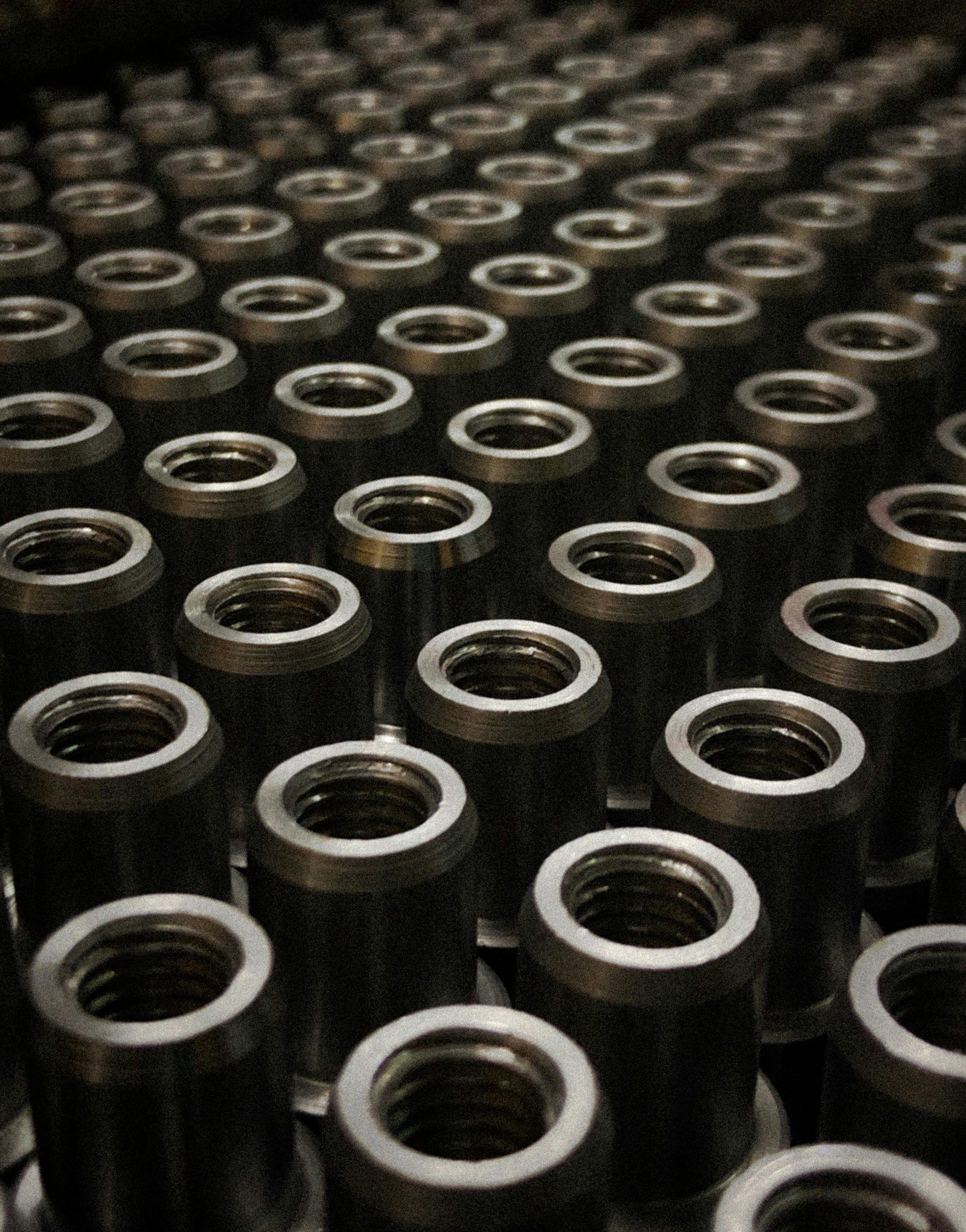
Gears, shafts, pins and bushings are hardened or case hardened so that they carry torque and resist wear and fatigue in drivetrains, steering systems and test rigs, while their cores stay tough enough to absorb shock.
- Typical parts
- Gears, shafts, pins, bushings, fixture parts
Industrial Equipment
Dies, punches, mold inserts, cutting blades and wear plates are vacuum hardened for high hardness and dimensional stability, and machine frames and bases are stress relieved so that they stay flat after machining.
- Typical parts
- Punches, die inserts, blades, wear plates, machine bases
Robotics
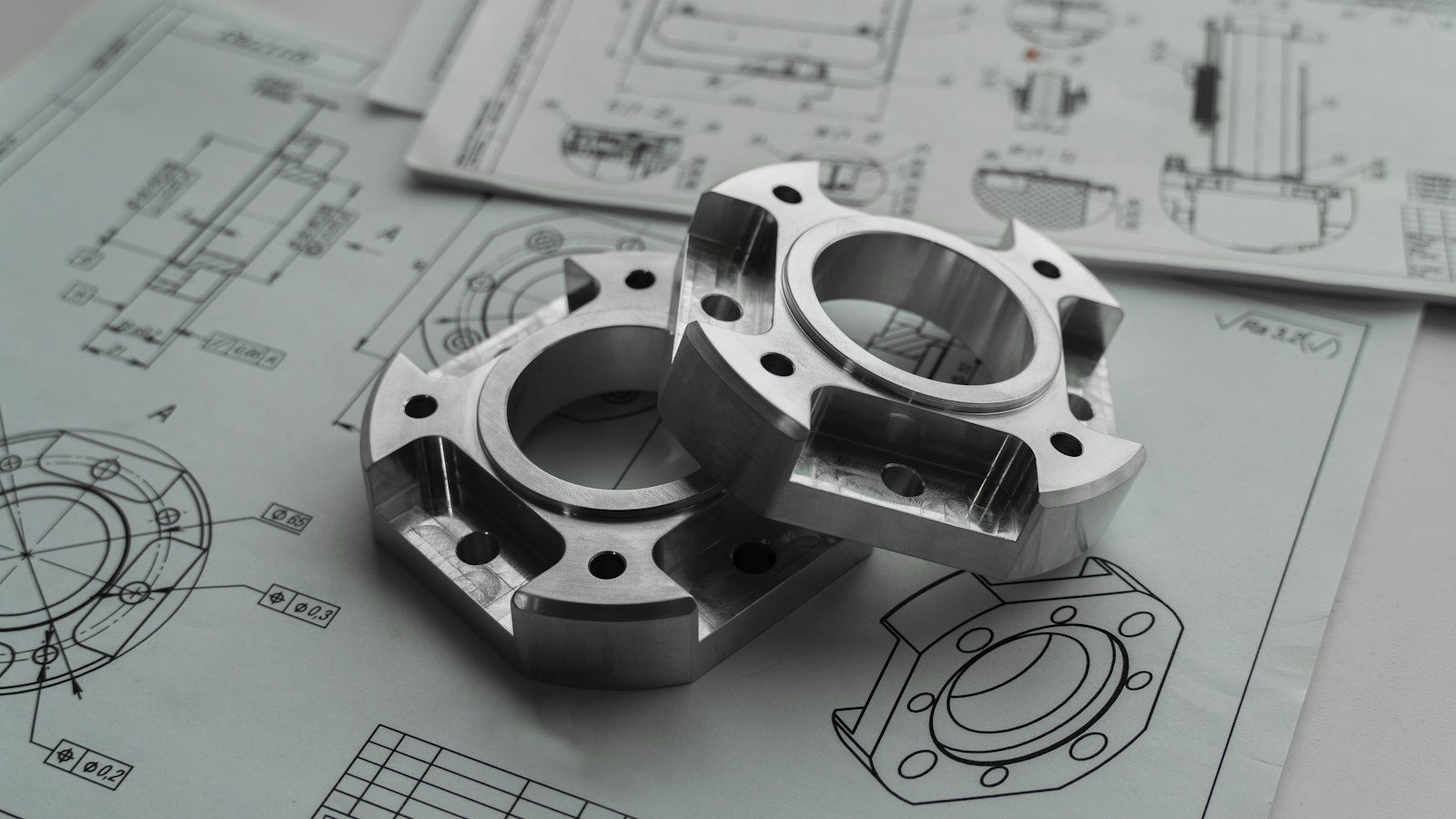
Locating pins, gripper jaws, cam followers, guides and reducer parts need hard, wear-resistant surfaces and stable dimensions to keep robots, grippers and automated machines accurate and reliable over many working cycles.
- Typical parts
- Locating pins, gripper jaws, cams, reducer parts, guides
Design Considerations for Heat-Treated Parts
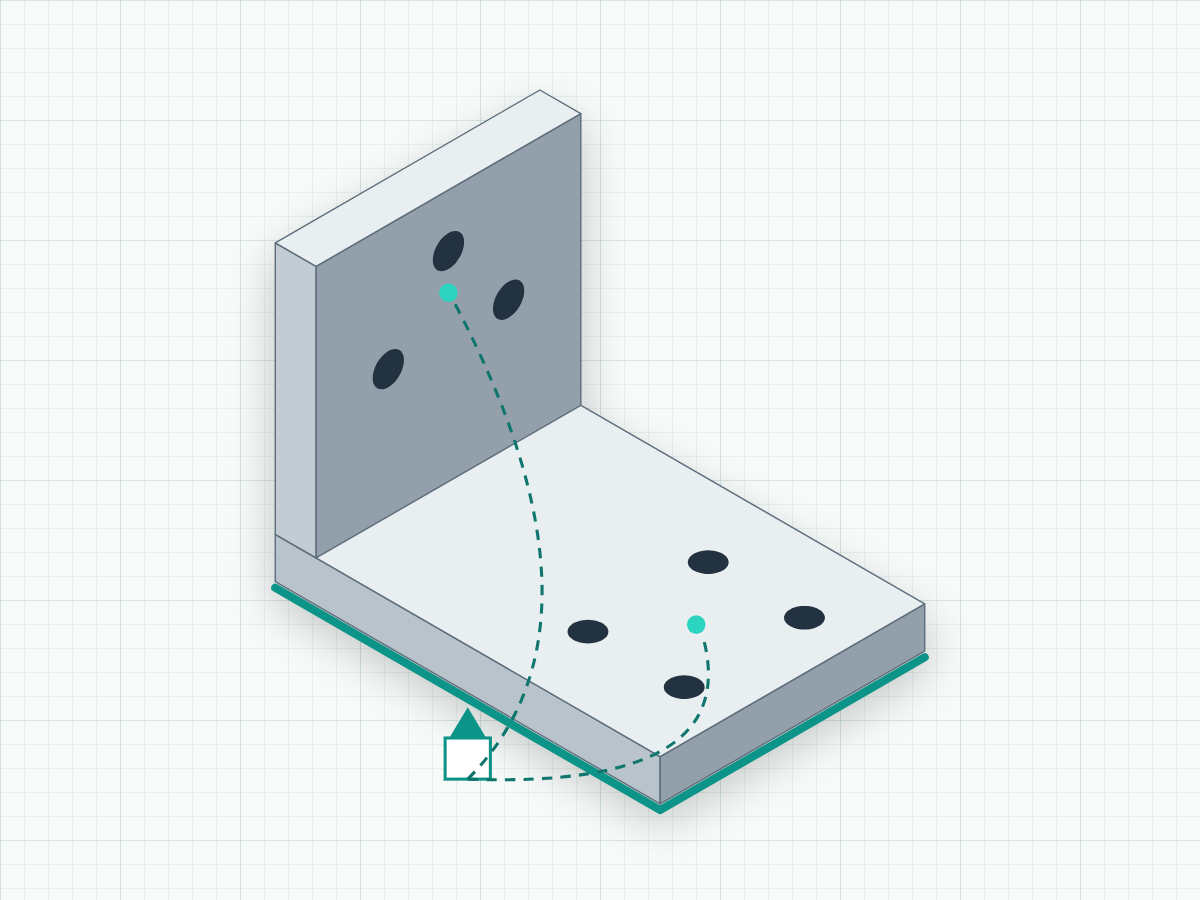
Heat treatment changes the size and shape of a part slightly and can crack a poorly designed one. Plan it together with the machining sequence; our free DFM review checks the points below.
| Consideration | Recommendation | Why |
|---|---|---|
| Hardness callout | Give a range and the test location | A single value cannot be held, and each test leaves a small indent |
| Machining sequence | Rough machine, heat treat, then finish critical features | Hardening causes distortion and a small change in size |
| Grinding stock | Leave stock on precision bores, faces and fits | Hardened features are ground to size after heat treatment |
| Wall thickness | Keep sections even and avoid abrupt changes | Thick and thin areas cool at different rates and warp or crack |
| Corners and grooves | Add radii to internal corners, keyways and holes | Sharp corners concentrate stress and start quench cracks |
| Case-hardened parts | Specify surface hardness and effective case depth | Case depth decides wear life and how much can be ground off |
| Soft areas | Mark threads or zones that must stay soft | They are protected during carburizing or hardened selectively |
| Surface condition | Expect a dark film unless the part is vacuum or bright treated | Grinding, blasting or tumbling afterwards gives a clean surface |
Heat Treatment and Related Finishes
Heat treatment changes the material itself. These finishes protect or clean the surface afterwards and are often specified on the same hardened parts; we do them in our own factory as well.
Black Oxide
A black conversion coating with almost no added thickness, often applied to hardened tooling, pins and fixture parts for low glare and mild corrosion protection once it is oiled.
- Thickness
- Under 1.5 µm
- Materials
- Carbon, alloy and tool steels
Electroless Nickel Plating
A uniform nickel-phosphorus layer that adds corrosion and wear resistance to steel parts. Heat treating the coating after plating raises its own hardness considerably, close to that of hard chrome.
- Coverage
- Uniform on all surfaces
- Hardness
- Rises when the coating is heat treated
Tumbling
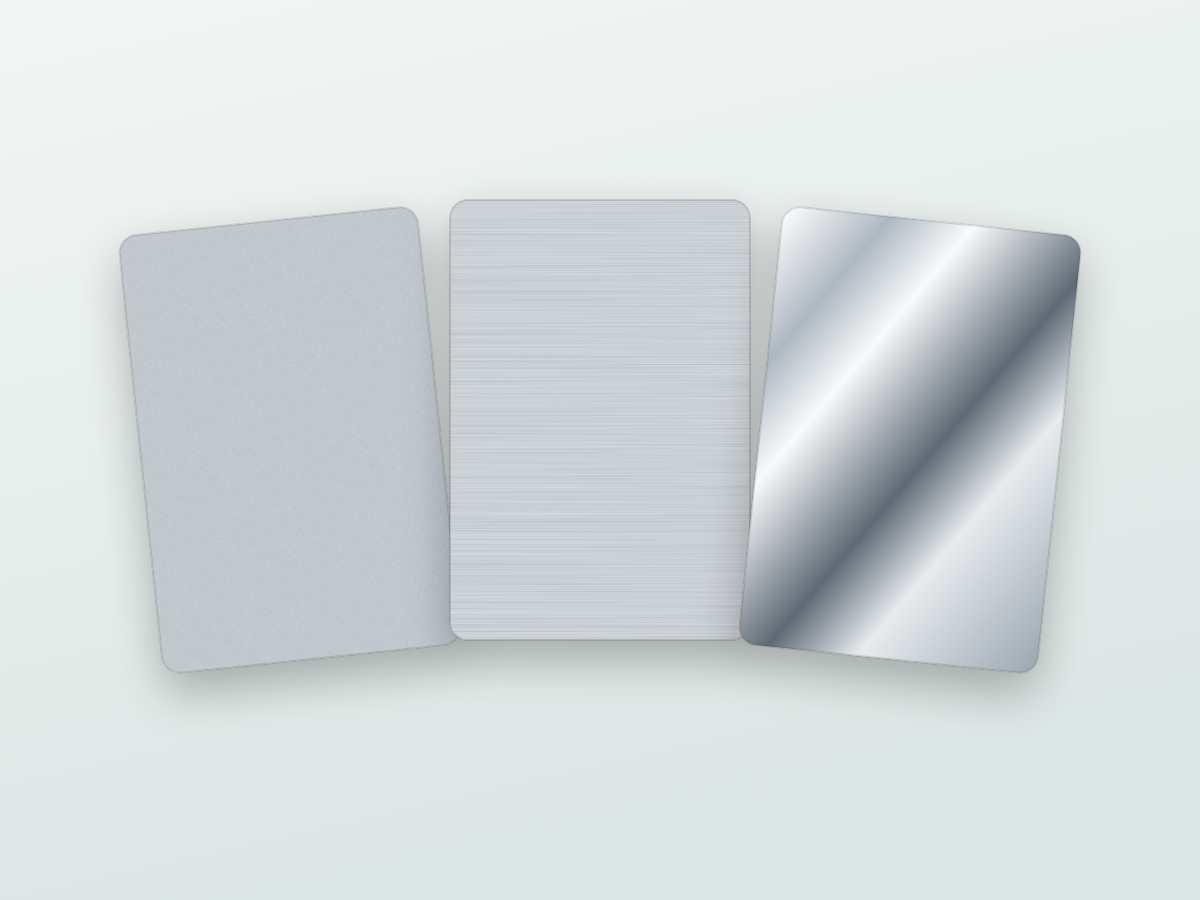
Vibratory or barrel finishing with abrasive media removes light scale, burrs and sharp edges after heat treatment, leaving batches of small hardened parts clean, even and safe to handle.
- Best for
- Small parts in batches
- Result
- Clean surface and rounded edges
Sand Blasting
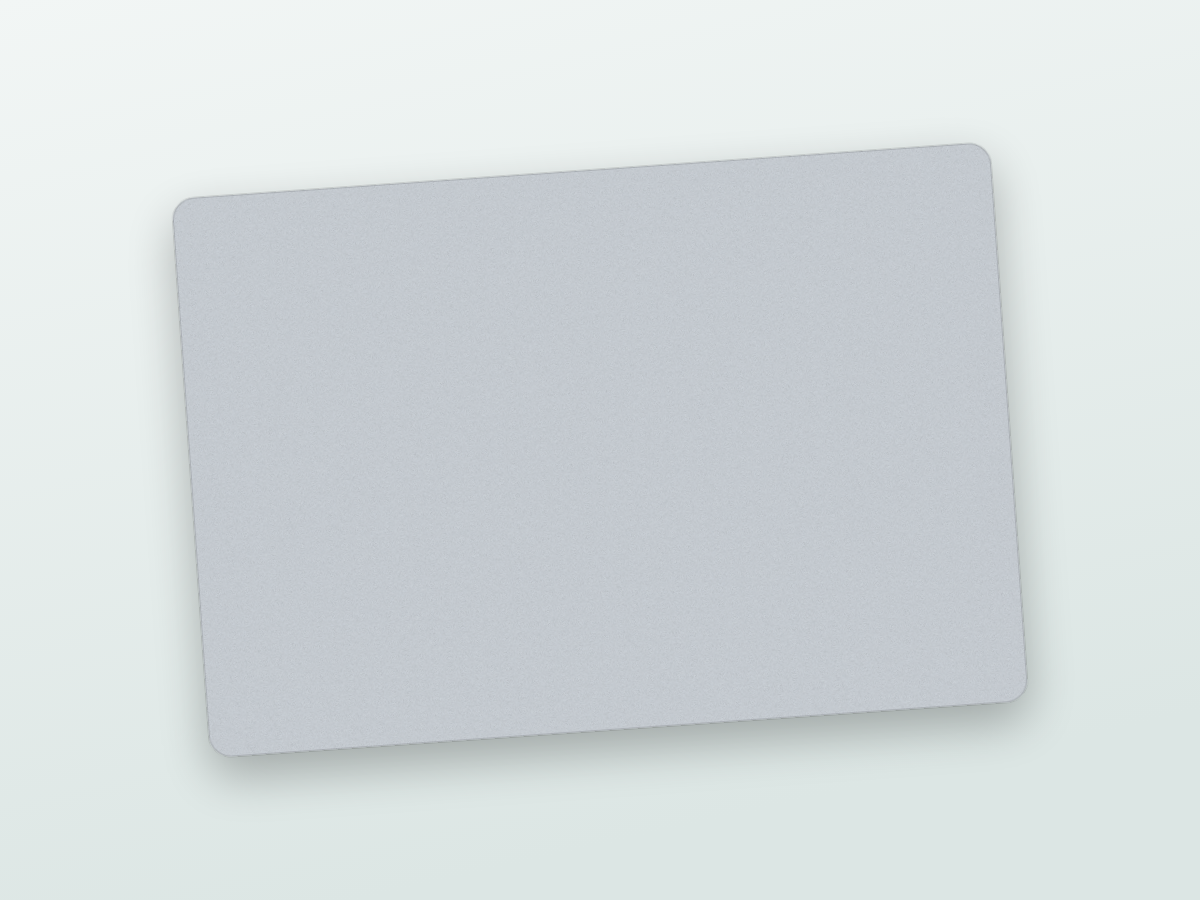
Blasting after heat treatment removes the dark film and light scale left by hardening in air or vacuum, and gives hardened parts a clean, even matte surface before coating or assembly.
- After heat treatment
- Removes film and light scale
- Result
- Uniform matte surface

Passivation
Hardened martensitic stainless steels such as 420 and 440C are passivated after heat treatment and grinding, which removes free iron and restores the passive film that keeps them from rusting.
- Materials
- Hardened stainless steels
- Benefit
- Corrosion resistance restored
Heat treatment comes before most coatings: parts are hardened, ground and then plated, oxidized or tumbled. Tell us the full sequence, so that we plan allowances and masking for every step.
Heat Treatment FAQs
Does heat treatment change the size of a part?
Yes, slightly. Steel changes volume as its structure transforms during hardening, and uneven cooling can bend or twist long, thin or asymmetric parts. Vacuum and gas quenching keep distortion lower than oil or water quenching, but precision features are still usually ground or finish machined after hardening. Tell us which dimensions are critical, and we will plan the allowances.
What are the benefits of vacuum heat treatment?
A vacuum furnace contains no oxygen, so parts do not scale or lose carbon at the surface and come out clean. Heating is slow and even, and gas quenching is gentler than oil, so distortion is lower and hardness is consistent from part to part. This makes vacuum hardening the usual choice for tool steels and precision parts.
Does heat treatment affect the surface finish?
It can. Heating in air forms scale and discoloration, decarburization can soften a thin surface layer, and quenching can distort parts or, on poorly designed ones, crack them. Vacuum and protective-atmosphere treatments keep the surface bright and clean. Where appearance or roughness matters, parts are ground, polished, blasted or tumbled after heat treatment.
Should parts be heat treated before or after machining?
Usually in between. Parts are rough machined with stock left on critical features, heat treated, then finish machined or ground to size, because hardening causes distortion and hard steel is slow to machine. Parts that only need stress relief are treated between roughing and finishing so that they stay stable. Pre-hardened steels of around 30 HRC can often be machined complete.
How accurately is the temperature controlled?
Furnace temperature is typically held within about ±5 to ±15 °C, depending on the temperature level, the furnace and the process. Tempering and aging at lower temperatures need tight control, because a few degrees change the final hardness, while annealing at high temperature tolerates a wider band. The cycle is set from the material grade and the hardness on your drawing.
Why does an aluminum part show blisters or cracks after heat treatment?
A dark grey surface, small blisters, cracks and a coarse fracture point to overheating, also called burning, during solution treatment. When the temperature comes too close to the melting range of the alloy, the grain boundaries begin to melt, and the part cannot be saved. Correct furnace control for each alloy prevents it, and affected parts are rejected rather than reworked.
How do I specify heat treatment on my drawing?
Give the exact material grade, the process and a hardness range rather than a single value, for example "Harden and temper to 56–60 HRC", plus the effective case depth for case-hardened parts. Mark areas that must stay soft, faces where hardness may be tested and dimensions that apply after heat treatment.
How is the hardness of my parts verified?
Hardness is measured on the part at a location that does not affect its function, or on a test piece treated in the same batch, and the result is recorded for your order. We provide COC, COA and COT documents, and a CMM report free of charge for the dimensions you specify. If a part is wrong because of a manufacturing error on our side, we remake it free of charge.
How do I get a quote for heat-treated parts?
Send a STEP, STP or IGES model and a PDF drawing with the material, quantity and heat treatment callout. An engineer reviews every request and quotes within 24 hours, simple parts often in 2–4 hours, with free DFM feedback. There is no minimum order quantity; heat treatment and grinding add time, so the lead time is confirmed in your quote.
Get a Quote for Heat-Treated Parts
Send us your models and drawings with the material grade, the process and the hardness range. We machine and heat treat the parts in our own factory, and our engineers reply with a detailed quote and free DFM feedback within 24 hours.

Jane
BOHUI PROTOTYPES LIMITED
Tell me the grade, the hardness you need and which features must be ground or stay soft after heat treatment, and I will check the details with our engineers.
You can send your request first and add files later by email or WhatsApp. For confidential designs, contact me before sharing your files.
Jane
BOHUI PROTOTYPES LIMITED
- Address: Xiaobian Street, Chang'an Town, Dongguan City, Guangdong Province, China
Request a Quote
Fields marked are required.